I have tinkered with the idea of starting a theology specific blog in the past and maybe keeping this one a secret for friends and family. I've come close to doing it a number of times. Theology can be a heavy subject and if I ever write something (or a series of somethings) that creates a bit of a stir on the internet I would rather not have prospective employers / colleagues (and haters) read some of my more silly, personal, or unfinished entries. If they dig far enough they will still find them, it is the internet after all, but for now it is advantageously and prudent for me to begin separating my theology posts from my personal posts.
Now the question must be asked: "how do you start a theology blog?" My first answer was to maybe start at the beginning with Genesis 1:1 and talk about the creation of the world. This is a logical place to start and perhaps even a very good place but I wasn't quite sure where to take it from there except to maybe continue on through the Pentateuch and talk about the creation of humanity, a Christian understanding of gender, The Fall, the effects of sin in the world, the Tower of Babel, The Flood, and on and on through The Bible until I hit the end. While logical the structure is too rigid and it would take too long to reach anything that is explicitly Christian as Judaism, Christianity, and Islam all share a common past.
Then I thought maybe I should start with the birth of Christ. This is another logical starting point. Start with the birth of the man upon whom your entire religion is based on. I had intended to do this *before* Christmas, but life, work, children, and disability conspired together so that I could not do much of anything except keep the house clean and hungry mouths fed let alone write theology.
Then in the midst of preparing to host Christmas and appeasing one overstimulated child and another teething child I thought that it might be best if I start a Christian theology blog *before* the birth of Christ; during the season of waiting which the Church has called Advent. Why Advent? Because it is immediately and universally relevant and prepares the reader to understand the birth of Christ. "Yes, Advent," the gears in my head turned happily at the thought. A parallel between what the world was like before Christ arrived and how the world is like now that he has arrived but has not yet returned. The hopes and fears of all the years and how all of creation looks to Christ forward and backward, yearning and groaning in expectation. And then, as my wife pointed out to me, 'waiting' has been my own personal theme for the last ten years; another piece clicks into place.
And so I have decided to begin with Advent, the season of waiting. Unfortunately I might have to wait to write it. Christmas was waited for, came, and is now gone for another year and I should do some research on the topic as a typical Baptist upbringing didn't really celebrate or understand Advent except that it had something to do with it almost being Christmas and lighting 5 candles. The celebration of Advent is rich with symbolism and tradition... I would like to do it justice.
Sunday, December 27, 2015
Saturday, December 19, 2015
30 years old and 2015 in review
Today is my 30th birthday. I feel old but I know this is supposed to be my prime. I feel tired but I know I have been abundantly blessed.
It's hard to believe I was furiously thesising a year ago, working at a breakneck pace to finish a rough draft of chapter 4. Thomas Watson was first and foremost on my mind most of the time. I finished that thesis. I got a B+. It was a respectable grade. I graduated and have a nice little display on the wall with my degrees, my funny hat, and my theology hood.
We moved on grad weekend. Packed everyone and everything up and drove across Canada in a four day blizzard. We got settled in a nice house in Barrie that worked well with our physical needs and is ideally situated by a park and a library with a fenced in back yard for our son to play in.
I burnt out. The two years previous had not been kind to us and our mettle was tested; then the pressure was off for a moment and I had, what many counselors would consider, a graceful crash.
Our second son was born and our life was forever changed again.
The next few months were kind of a blur. We got connected at Willow Creek which was really good. Health started to return to us which was greatly needed. I helped out Church on the Hill in Orillia with Bible Study and built them a website.
I had to change my priorities in life a few times. I am grateful for my wife and have no idea what I would do without her.
Sammy has grown quickly and is by all means a good baby. Jonathan was diagnosed with autism and we spent three months going to parental classes to help him learn language. We got in close with Tori's parents who have been absolutely wonderful to us throughout everything.
I got full time work at The Source call centre where I get paid decently well to deal with varying levels of crazy on a day to day basis. We got news that our best friends were getting a divorce and that threw us (perhaps me especially) for about three months. Tori and I worked on our own relationship, taking time for honest conversations and serving each other.
Now we're hosting Christmas in just under a week and have been connecting with my sister and Tori's brother and sister-in-law through Heroes of the Storm and World of Warcraft.
It's only been a year since thesis and I want to study again. I suppose that means I'm a lifer. Oh well. Maybe next year I will have time. I suppose I could make time but what would I drop from my schedule? Life is very full right now and I am often tired.
So that was my rambli-oistic year in review. We cram a lot into life. Now on to 31 I suppose. May the Lord grant us wisdom and direct our steps according to his will.
Greg Out
It's hard to believe I was furiously thesising a year ago, working at a breakneck pace to finish a rough draft of chapter 4. Thomas Watson was first and foremost on my mind most of the time. I finished that thesis. I got a B+. It was a respectable grade. I graduated and have a nice little display on the wall with my degrees, my funny hat, and my theology hood.
We moved on grad weekend. Packed everyone and everything up and drove across Canada in a four day blizzard. We got settled in a nice house in Barrie that worked well with our physical needs and is ideally situated by a park and a library with a fenced in back yard for our son to play in.
I burnt out. The two years previous had not been kind to us and our mettle was tested; then the pressure was off for a moment and I had, what many counselors would consider, a graceful crash.
Our second son was born and our life was forever changed again.
The next few months were kind of a blur. We got connected at Willow Creek which was really good. Health started to return to us which was greatly needed. I helped out Church on the Hill in Orillia with Bible Study and built them a website.
I had to change my priorities in life a few times. I am grateful for my wife and have no idea what I would do without her.
Sammy has grown quickly and is by all means a good baby. Jonathan was diagnosed with autism and we spent three months going to parental classes to help him learn language. We got in close with Tori's parents who have been absolutely wonderful to us throughout everything.
I got full time work at The Source call centre where I get paid decently well to deal with varying levels of crazy on a day to day basis. We got news that our best friends were getting a divorce and that threw us (perhaps me especially) for about three months. Tori and I worked on our own relationship, taking time for honest conversations and serving each other.
Now we're hosting Christmas in just under a week and have been connecting with my sister and Tori's brother and sister-in-law through Heroes of the Storm and World of Warcraft.
It's only been a year since thesis and I want to study again. I suppose that means I'm a lifer. Oh well. Maybe next year I will have time. I suppose I could make time but what would I drop from my schedule? Life is very full right now and I am often tired.
So that was my rambli-oistic year in review. We cram a lot into life. Now on to 31 I suppose. May the Lord grant us wisdom and direct our steps according to his will.
Greg Out
Tuesday, December 1, 2015
When Christian Friends Fall Away
I have not written nearly as often as I intended to. Something came up that has thrown me off balance for two months. Two dear friends of mine are getting a divorce and I fear that one of them has fallen away from the Lord.
It's always saddening when a Christian friend falls away from the faith. As a graduate of Briercrest and having lived at the school for ten years I've made a lot of Christian friends and I've also seen some of them, and others, fall away.
The amount of students that stop going to church after their Christian education is concerning and nearly all of them slip into worldly habits and philosophies that reinforce their life in the flesh when we are commanded to live in the Spirit.
I have Christian friends who as soon as they left Christian community went back to drinking and partying and sleeping around which is tragic. They live in the flesh and not the Spirit; it is as if the teachings of Jesus and the traditions of the Church have made no difference in their lives and so they go on in their sins not realizing that they must repent if they are to be counted with the believers of Christ. (Matt 3:8, 4:17, 11:20, 12:41; Mark 1:4;15, 6:12, Luke 3:3;8, 10:13, 11:32, 13:1-10, 24:47; Acts 2:38, ... I could go on)
But this incident between my two friends shook me because we were so close and I honestly did not see it coming, although I believe The Lord prepared me for the news over time. He was a firecracker personality who cared deeply for others and had many spiritual gifts. He aced his premarital counseling course, was a spiritual leader in the community, and even lead within the Church. She was a gentle soul with gifts of teaching, counseling, and musical talent. She loved to build into new leaders, work with children, and organize / run summer camps. Together they were a pastoral force to be reckoned with, a potent power for good in the world. I stood with them at their wedding and they stood with me at mine.
Over time our friendship became strained as our lives took different directions. They left Caronport to pursue jobs elsewhere and aside from two brief points of contact we nary saw nor heard from them for three years. Then the news. He left her for a boyfriend.
I was shocked. Our mentor and pastor was physically ill and brought to tears. We reached out to her and found that her family and church were very supportive and we offered our support such as it was at a distance. After weeks of agonizing prayer and soul searching I confronted him. The message that continually came to me in my prayers, which became clearer, louder, and more forceful as time went on was that this was sin. Leaving your faithful wife is adultery, a black sin that is unquestionably wrong for one who knows the Lord and bound himself in Holy matrimony, especially to a Christian wife. The reasons for the divorce were not good enough, and he knows it. His new lifestyle was inherently sinful, instead of walking by the Spirit he gratifies the desires of the flesh. The Lord's grace will cover it but if he refuses to let it go but he will not be able to serve the Kingdom as he was intended to and the place that was appointed to him will be given to another. He must repent of his sins and be reconciled to The Lord and to his wife.
There were so many scripture verses and themes flowing through my mind I can not recount them now. He listened patiently to the message I had for him, He thanked me and said that he would take into consideration and that he knew that I cared for him because I called. My heart both sank and was strangely relieved. It sank because I know that line of conversation as his flowery and diplomatic rhetoric for making someone think the best of him while avoiding going any further into the topic. I suspect the Lord has sent him many messengers to tell him the same message I was given, mine being one of the last. I was strangely relieved because even though I could sense that he was deflecting and would not take the message to heart I had given him the message the Lord had commanded me to give.
What followed afterwards was a long process of meditating and praying upon what had happened. I may write more about this topic later.
Greg Out.
It's always saddening when a Christian friend falls away from the faith. As a graduate of Briercrest and having lived at the school for ten years I've made a lot of Christian friends and I've also seen some of them, and others, fall away.
The amount of students that stop going to church after their Christian education is concerning and nearly all of them slip into worldly habits and philosophies that reinforce their life in the flesh when we are commanded to live in the Spirit.
"But I say, walk in the Spirit, and you will not gratify the desires of the flesh. For the desires of the flesh are against the Spirit, and the desires of the Spirit are against the flesh, for these are opposed to each other, to keep you from doing the things you want to do." (Galatians 5:16-17)
I have Christian friends who as soon as they left Christian community went back to drinking and partying and sleeping around which is tragic. They live in the flesh and not the Spirit; it is as if the teachings of Jesus and the traditions of the Church have made no difference in their lives and so they go on in their sins not realizing that they must repent if they are to be counted with the believers of Christ. (Matt 3:8, 4:17, 11:20, 12:41; Mark 1:4;15, 6:12, Luke 3:3;8, 10:13, 11:32, 13:1-10, 24:47; Acts 2:38, ... I could go on)
But this incident between my two friends shook me because we were so close and I honestly did not see it coming, although I believe The Lord prepared me for the news over time. He was a firecracker personality who cared deeply for others and had many spiritual gifts. He aced his premarital counseling course, was a spiritual leader in the community, and even lead within the Church. She was a gentle soul with gifts of teaching, counseling, and musical talent. She loved to build into new leaders, work with children, and organize / run summer camps. Together they were a pastoral force to be reckoned with, a potent power for good in the world. I stood with them at their wedding and they stood with me at mine.
Over time our friendship became strained as our lives took different directions. They left Caronport to pursue jobs elsewhere and aside from two brief points of contact we nary saw nor heard from them for three years. Then the news. He left her for a boyfriend.
I was shocked. Our mentor and pastor was physically ill and brought to tears. We reached out to her and found that her family and church were very supportive and we offered our support such as it was at a distance. After weeks of agonizing prayer and soul searching I confronted him. The message that continually came to me in my prayers, which became clearer, louder, and more forceful as time went on was that this was sin. Leaving your faithful wife is adultery, a black sin that is unquestionably wrong for one who knows the Lord and bound himself in Holy matrimony, especially to a Christian wife. The reasons for the divorce were not good enough, and he knows it. His new lifestyle was inherently sinful, instead of walking by the Spirit he gratifies the desires of the flesh. The Lord's grace will cover it but if he refuses to let it go but he will not be able to serve the Kingdom as he was intended to and the place that was appointed to him will be given to another. He must repent of his sins and be reconciled to The Lord and to his wife.
There were so many scripture verses and themes flowing through my mind I can not recount them now. He listened patiently to the message I had for him, He thanked me and said that he would take into consideration and that he knew that I cared for him because I called. My heart both sank and was strangely relieved. It sank because I know that line of conversation as his flowery and diplomatic rhetoric for making someone think the best of him while avoiding going any further into the topic. I suspect the Lord has sent him many messengers to tell him the same message I was given, mine being one of the last. I was strangely relieved because even though I could sense that he was deflecting and would not take the message to heart I had given him the message the Lord had commanded me to give.
What followed afterwards was a long process of meditating and praying upon what had happened. I may write more about this topic later.
Greg Out.
Monday, November 9, 2015
The Need for Lament
Lament. This is a word that we do not understand in North America. We associate it with sadness, grief, unhappiness, mourning, crying, wailing, and misery and so we avoid it, don't talk about it, and don't understand it. Would you believe me if I told you that lament is an important part of healing and that it brings joy and peace in the midst of pain and disappointment? Here is an introduction to the ancient and sacred practice of godly lament.
True lament is to honour God in a beautiful and costly way. It is a passionate expression of grief, a pouring out of your soul and innermost thoughts and feelings to the Lord. In lament you bring your situation and lay it before the throne of God in all its largeness and terribleness. The expression of lament depends upon the person. For myself I lay out my grief and the situations that caused it in all their intricacies and details, how they connect to larger issues, what I have done, what others have done, what I cannot do, and how I am small and limited in knowledge, strength, and courage. I am an analytical, how I express myself before God will be different than how others express themselves. For others to express lament might be to literally wail or to just pray concerning their sadness or to even yell and scream back to God. In any case, there is no precise formula or rule for how to express lament only that it is expressed sincerely. Then, once we have expressed our sorrow and grief, we express our faith and trust in God in the midst of it and recommit ourselves in devotion to Christ in spite of the circumstances.
This is the pattern of the Psalms, the Prophets, and even Jesus himself; that we express our grief, frustration, pain, and disappointment to God and then reestablish our trust in his faithfulness. Just read the Psalms of David or the Book of Lamentations to see the pattern of lament. This is not complaining to God, this is drinking from the river of life when we are dying of thirst. As created beings and image bearers of God we are literally designed to live in relationship with God and lament is the practice of this primal need in a fallen world. There are no problems so large or so small that God will not address them if they are brought to him with humbleness and sincerity.
Some souls might be afraid or embarrassed to lament, thinking that they're grief is of little or no concern and they just need to try harder or toughen up or mature. This is wrong headed thinking. The Lord takes great delight in an open and contrite heart and will teach, strengthen, and grow any soul that actively puts their faith in him.
Our over therapeutic culture tells us to stay positive, be happy, surround yourself with positive people, exercise, and think good thoughts to avoid depression and work through the bad of life. While these things have value and can be effective let us add to them the practice of sacred lament. Don't avoid or deny the pain and sorrow in your heart, bring it to the Lord, pray for healing, and confess his faithfulness. Working through the bad is always better than just burying it else it will start to make your roots bitter and poison the waters of the soul.
True lament is to honour God in a beautiful and costly way. It is a passionate expression of grief, a pouring out of your soul and innermost thoughts and feelings to the Lord. In lament you bring your situation and lay it before the throne of God in all its largeness and terribleness. The expression of lament depends upon the person. For myself I lay out my grief and the situations that caused it in all their intricacies and details, how they connect to larger issues, what I have done, what others have done, what I cannot do, and how I am small and limited in knowledge, strength, and courage. I am an analytical, how I express myself before God will be different than how others express themselves. For others to express lament might be to literally wail or to just pray concerning their sadness or to even yell and scream back to God. In any case, there is no precise formula or rule for how to express lament only that it is expressed sincerely. Then, once we have expressed our sorrow and grief, we express our faith and trust in God in the midst of it and recommit ourselves in devotion to Christ in spite of the circumstances.
This is the pattern of the Psalms, the Prophets, and even Jesus himself; that we express our grief, frustration, pain, and disappointment to God and then reestablish our trust in his faithfulness. Just read the Psalms of David or the Book of Lamentations to see the pattern of lament. This is not complaining to God, this is drinking from the river of life when we are dying of thirst. As created beings and image bearers of God we are literally designed to live in relationship with God and lament is the practice of this primal need in a fallen world. There are no problems so large or so small that God will not address them if they are brought to him with humbleness and sincerity.
Cast all your anxieties upon him because he cares for you.
1 Peter 5:7
Some souls might be afraid or embarrassed to lament, thinking that they're grief is of little or no concern and they just need to try harder or toughen up or mature. This is wrong headed thinking. The Lord takes great delight in an open and contrite heart and will teach, strengthen, and grow any soul that actively puts their faith in him.
Our over therapeutic culture tells us to stay positive, be happy, surround yourself with positive people, exercise, and think good thoughts to avoid depression and work through the bad of life. While these things have value and can be effective let us add to them the practice of sacred lament. Don't avoid or deny the pain and sorrow in your heart, bring it to the Lord, pray for healing, and confess his faithfulness. Working through the bad is always better than just burying it else it will start to make your roots bitter and poison the waters of the soul.
Monday, October 12, 2015
Thank you for calling The Source, my name is Greg! How can I help you?
After a full year of going without work I finally have finally landed the prestigious position of E-Commerce Customer Relations Agent (or something that sounds equally impressive) at The Source; also known as a common call centre agent. It's not my dream job, and it probably won't lead me into my dream job, but it is something that I am good at and will pay the bills. As far as call centres go, The Source HQ in Barrie is probably the best in the city. We are treated with respect, my co-workers are friendly, and the management is warm with an open door policy. It definitely reminds me of working for Quill (Staples) in Regina except The Source specializes in electronics and their training program is much shorter and informal. I am thankful though. I enjoy helping people, I enjoy working with electronics, it pays well enough to start at, and it's relatively close to home.
It feels a little strange I suppose, having reached an academic high point in acquiring my masters degree in theology after a long arduous journey to not be able to specifically use it to make a living yet. I am patient though. Theology is not something you go into to make money or even make a living. You only go into theology because you love God and seek to serve him in a greater capacity. I suppose you could go into it because you love the study of God but it is a sad reality to love studying God without loving God himself. I believe that is commonly called 'religious studies' or even 'biblical studies' in a strictly academic (and profane) sense. In any case, I chose to go into theology and work towards a masters degree in the subject because I love the Lord Jesus and sought to prepare myself for service in his Kingdom. I have always wanted to teach the basics of the Christian faith to others either as a mentor or as an instructor in a Bible School setting, but even though this reality still feels far off I have found myself continually growing deeper both in my faith as a Christ follower and in my knowledge as an academic. I have come to learn of some of the greater mysteries of Christian doctrine, like the Trinity, self-deification, and the unbroken and ever expanding voice of Scripture united throughout time. It is rich and fulfilling to contemplate these things, a good work that tills the soil of my mind and heart for what I hope will be an ever increasing harvest.
We are rebuilding. My family and I have been attending Willow Creek Baspist Church just north of Barrie in Midhurst. Tori used to work there at camps and did tech and so there always seems to be some new person who is super excited to see her again. We are attending life group which has been very good for us. There is also a Moms and Pre-schoolers group that meets which I think has lots of good potential. I have been able to assist a pastor in Orillia by building him a website and help out with leading Bible Study. Every day our children learn and grow more. We have begun the journey of working through an Autism Spectrum Disorder diagnosis and have worked things out with grandma and grandpa so that we can attend the support group meetings which have been encouraging and helpful.
In the calm, when I can get a good look at what is around me, I see new growth and small flowers starting in the mangled soil that had become our life. When I lose my focus and the kids are screaming and I'm tired, and I'm pushing through the chores of life I am sometimes discouraged and continue to fight through depression. But regardless of what perspective I hold I trust and believe that we are where God wants us to be and, by the grace of God, will continue forward in faith.
For now a lot of my time is spent learning the new job and sometimes getting yelled at by angry customers. I suppose those situations could often make excellent blog posts in and of themselves. Writing is cathartic after all. Everything is redeemable in Christ, even the mundane. I have already made a good friend who is not a Christian but is excited to come to church with me and dive into life groups.
I feel again as though I am one of the servants in the parable of the talents. The master has entrusted me with a certain amount and now I must invest it to earn him more. If I am faithful with a little bit then more will be given. I do not want to compare what the master has entrusted me with what the master has entrusted others, that misses the point and distracts me from my purpose. My purpose is to be faithful with what he has given me. What has he given me? A wife. Two young boys. Family close by. A church community. A non-Christian friend. A theological education. A job. A vehicle. And resources to make a living. May I stuart these good gifts well.
Greg Out
It feels a little strange I suppose, having reached an academic high point in acquiring my masters degree in theology after a long arduous journey to not be able to specifically use it to make a living yet. I am patient though. Theology is not something you go into to make money or even make a living. You only go into theology because you love God and seek to serve him in a greater capacity. I suppose you could go into it because you love the study of God but it is a sad reality to love studying God without loving God himself. I believe that is commonly called 'religious studies' or even 'biblical studies' in a strictly academic (and profane) sense. In any case, I chose to go into theology and work towards a masters degree in the subject because I love the Lord Jesus and sought to prepare myself for service in his Kingdom. I have always wanted to teach the basics of the Christian faith to others either as a mentor or as an instructor in a Bible School setting, but even though this reality still feels far off I have found myself continually growing deeper both in my faith as a Christ follower and in my knowledge as an academic. I have come to learn of some of the greater mysteries of Christian doctrine, like the Trinity, self-deification, and the unbroken and ever expanding voice of Scripture united throughout time. It is rich and fulfilling to contemplate these things, a good work that tills the soil of my mind and heart for what I hope will be an ever increasing harvest.
We are rebuilding. My family and I have been attending Willow Creek Baspist Church just north of Barrie in Midhurst. Tori used to work there at camps and did tech and so there always seems to be some new person who is super excited to see her again. We are attending life group which has been very good for us. There is also a Moms and Pre-schoolers group that meets which I think has lots of good potential. I have been able to assist a pastor in Orillia by building him a website and help out with leading Bible Study. Every day our children learn and grow more. We have begun the journey of working through an Autism Spectrum Disorder diagnosis and have worked things out with grandma and grandpa so that we can attend the support group meetings which have been encouraging and helpful.
In the calm, when I can get a good look at what is around me, I see new growth and small flowers starting in the mangled soil that had become our life. When I lose my focus and the kids are screaming and I'm tired, and I'm pushing through the chores of life I am sometimes discouraged and continue to fight through depression. But regardless of what perspective I hold I trust and believe that we are where God wants us to be and, by the grace of God, will continue forward in faith.
For now a lot of my time is spent learning the new job and sometimes getting yelled at by angry customers. I suppose those situations could often make excellent blog posts in and of themselves. Writing is cathartic after all. Everything is redeemable in Christ, even the mundane. I have already made a good friend who is not a Christian but is excited to come to church with me and dive into life groups.
I feel again as though I am one of the servants in the parable of the talents. The master has entrusted me with a certain amount and now I must invest it to earn him more. If I am faithful with a little bit then more will be given. I do not want to compare what the master has entrusted me with what the master has entrusted others, that misses the point and distracts me from my purpose. My purpose is to be faithful with what he has given me. What has he given me? A wife. Two young boys. Family close by. A church community. A non-Christian friend. A theological education. A job. A vehicle. And resources to make a living. May I stuart these good gifts well.
Greg Out
Friday, September 25, 2015
Thoughts about the Predicting of Christ's Return
Another prediction of Christ's return, another day where the world does not end. Jesus himself was clear on this point, but his followers have always had a difficult time understanding him in one degree or another.
You would think that this would be enough to dissuade Christians from attempting to pin point the exact day of Christ's return or at the very least not take seriously anyone who claimed to have found it. History shows us otherwise and especially since the modern era there have been many false predictions based upon numerology, star charts, blood moons, political maneuverings, popular fiction and unhinged religious leaders. They take some of Jesus' words concerning the end of times and then try to match them with what is going on in the present day. The result has been thousands of false predictions, some of which were mixed with strange ideas and cost people their lives.
The precise date and time of our lord's return is none of our business. He will come when he comes and our task is to be ready, which means cultivating a life of faith and devotion in the present that will last eternity. The Father has decided that none one will know, not even the Son. How then would anyone find out? Did the creator of the universe accidentally leave the answer in a constellation? If he did then how would you go about perceiving it? Will God appear to a doomsday enthusiast like he did to Jacob and be wrestled with until morning? Perhaps the Father will change his mind on the issue and nullify the scripture that says the time will come when nobody expects it like a thief in the night. (1 Thes 5:2) No, this mystery is shut to us and we will not have access to it until after it has happened.
So why do Christians continually announce dates for Jesus' return? I think there are a few reasons. The evangelical culture of America thoroughly embraced the idea of a literal apocalypse which became popularized by End Times preaching, prophecy conventions, and Tim LaHaye's "Left Behind" series. A literal reading of the Bible has also been a pillar of American Evangelicalism and so between these two phenomena there have been widespread acceptance and expectation of what became known as 'The Rapture' where all the Christians would be taken up into heaven (1 Thess 4:16-17) and the tribulations which were to follow. (During a course I took on the Book of Revelation the professor explained that these particular apocalyptic expectations are unique to North America, no other form of Christianity has ever conceived of 'The Rapture', but that is part of another discussion altogether.)
In one respect the Lord's return is supposed to be an encouraging thing (1 Thess 4:18) and the more charismatic among us tend to thrive on the apocalyptic. The majority of End Times hype I see on social media wherein blood moons, wars, and the itinerary of the Pope herald the second coming is enthusiasm taken to the edge of sound doctrine. It is important to be grounded in the Scriptures and sound doctrine or enthusiasm can be mistaken for inspiration and encouraging others by reminding them that the Lord could return very soon can become futile predicting, As for the 'prophetic ministries' that ride the circuit claiming to have identified The Two Witnesses, The Mark of the Beast, Gog and Magog, and the star called Wormwood, they are spiritual snake oil peddlers who should be ignored.
Greg Out.
"But about that day or hour no one knows, not even the angels in heaven, nor the Son, but only the Father." Matthew 24:36
You would think that this would be enough to dissuade Christians from attempting to pin point the exact day of Christ's return or at the very least not take seriously anyone who claimed to have found it. History shows us otherwise and especially since the modern era there have been many false predictions based upon numerology, star charts, blood moons, political maneuverings, popular fiction and unhinged religious leaders. They take some of Jesus' words concerning the end of times and then try to match them with what is going on in the present day. The result has been thousands of false predictions, some of which were mixed with strange ideas and cost people their lives.
 |
| Coincidence? Actually yes, I think it is... |
So why do Christians continually announce dates for Jesus' return? I think there are a few reasons. The evangelical culture of America thoroughly embraced the idea of a literal apocalypse which became popularized by End Times preaching, prophecy conventions, and Tim LaHaye's "Left Behind" series. A literal reading of the Bible has also been a pillar of American Evangelicalism and so between these two phenomena there have been widespread acceptance and expectation of what became known as 'The Rapture' where all the Christians would be taken up into heaven (1 Thess 4:16-17) and the tribulations which were to follow. (During a course I took on the Book of Revelation the professor explained that these particular apocalyptic expectations are unique to North America, no other form of Christianity has ever conceived of 'The Rapture', but that is part of another discussion altogether.)
In one respect the Lord's return is supposed to be an encouraging thing (1 Thess 4:18) and the more charismatic among us tend to thrive on the apocalyptic. The majority of End Times hype I see on social media wherein blood moons, wars, and the itinerary of the Pope herald the second coming is enthusiasm taken to the edge of sound doctrine. It is important to be grounded in the Scriptures and sound doctrine or enthusiasm can be mistaken for inspiration and encouraging others by reminding them that the Lord could return very soon can become futile predicting, As for the 'prophetic ministries' that ride the circuit claiming to have identified The Two Witnesses, The Mark of the Beast, Gog and Magog, and the star called Wormwood, they are spiritual snake oil peddlers who should be ignored.
Greg Out.
Sunday, September 20, 2015
Thoughts on Losing our Saltiness (Matthew 5:13)
In Matthew 5:13 Jesus tells his followers, "you are the salt of the earth, but if salt has lost its taste, how shall its saltiness be restored? It is no longer good for anything except to be thrown out and trampled under people's feet."
This is a popular passage that countless preachers and theologians have taught on. Salt was important in the ancient world because of how it preserved food. Since there were no refrigerators meat would begin to rot unless it was properly salted. In the same way sin makes the world go rotten and the preservative against this are Jesus' followers who would later be empowered by the Holy Spirit as they continually submitted to Christ. The first part of this passage is immensely popular (at least it is in Evangelical preaching) and there is always room to expand this metaphor in light of the rest of Scripture and discern practical applications but my thoughts right now are on the rest of the passage.
So what is Jesus talking about then? Most commentaries you pick up will say something along the lines that this is a figure of speech for an ineffective Christianity that is either too watered down by the philosophies of the world or becomes dispirited when called to the difficulties of indignation and persecution. This is the most common explanation but there are difficulties with this reading because persecution of Jesus' followers' would not have been a reality yet, although it is possible that Jesus was preparing them for such.
One explanation that I had not heard before that I think warrants some investigation is the idea that Jesus is talking about the salt in the temple that was for sacrificial use.2 Jesus was a Jew speaking to Jews and the Book of Matthew was written by a Jew specifically for the Jews so it should not come to anyone's surprise that Jesus might be making a distinctively Jewish reference. The implications of this interpretation will be made clear further on as it is this interpretation that I would like to explore.
This may not be the precise meaning Jesus communicated to the original audience but I think it still has its merit as a reasonable interpretation and a truth that I have encountered in my own life. Allow me to share a personal anecdote.
I remember while in college and seminary I had a number of friends in the college, one of whom continually ignored his responsibilities as a Christian and knew it. Without going into any detail lets just say that he (and everyone around him including non-Christians) knew that he was not a good Christian. By his last semester I couldn't figure out why he was even there since his life was a mess and he seemed determined to not learn anything or change his ways. I had seen every type of loving care extended to him from godly instruction to tough love confrontation to gentle pastoral care but nothing would inspire him to live for Christ. The explanation came from another friend of mine who knew the situation, "maybe he's one of those friends God puts in our lives for us to learn from..." This put his struggles into perspective. He might not get any benefit from being there but the rest of us did by watching the desolation of his godless walk continually unfold. Salt that needed to be thrown out because it had become useless for its intended purpose was being used so that others would be sharpened in fulfilling their intended purposes.
I think this is an intended good that God brings about when we refuse to follow him.
There is still one question that presses for an answer though. If salt that loses its saltiness cannot be made salty again then what happens to Christians who fall away from Christ? Are we to conclude that Christians who lose their witness or fall away from Christ are without hope?
No. Salt that is no longer salt cannot become salt again of its own will but God is able to do the impossible. The warning is strict and the illustration is vivid but I don't think Jesus is talking about simply lapsing into sin or losing salvation because you made a mistake. Christian faith is founded upon God's grace which is instantly and abundantly available to any who repent of their sins. This isn't a "if you mess up you'll be thrown out of the Kingdom and not allowed back in," rather it is "if you completely turn your back on Jesus and wallow gleefully in your sin knowing full well that it is evil and enjoying it anyway without remorse or repentance."
I think there are times when a Christian loses his saltiness, so to speak, when his sins wreck his witness and even after repentance and forgiveness he must live with the consequences. A pastor who is caught in a scandal or abuse is not fit for ministry and so his participation in the Kingdom is restricted.
Thoughts? Comments? Please write them below.
Greg Out.
_______________________________________________________
"You are the salt of the earth..."
"If salt has lost its taste..."
what is Jesus talking about here? Generally speaking salt does not lose its saltiness. You can grind it up, dump it in water, and use it to preserve your food but it will not become any less salty. Scientifically speaking common table salt is a very stable compound (Sodium Chloride [NaCl]). The only way for salt to lose its saltiness is for it to cease to be salt via a chemical reaction which changes it into a different compound.1 We could apply this understanding to Jesus' followers by saying that for them to "lose their saltiness" is for them to cease being Jesus' followers. After all, it is Jesus who provides the "saltiness" necessary to preserve the world from decay through the work of the Holy Spirit as Jesus' followers continue in active faith. This is a nice thought and I believe it's true but it is probably not the exact same truth that Jesus was communicating to the original audience at this time since the Holy Spirit had not arrived yet and nobody had a scientific understanding of the atomic structure of salt.So what is Jesus talking about then? Most commentaries you pick up will say something along the lines that this is a figure of speech for an ineffective Christianity that is either too watered down by the philosophies of the world or becomes dispirited when called to the difficulties of indignation and persecution. This is the most common explanation but there are difficulties with this reading because persecution of Jesus' followers' would not have been a reality yet, although it is possible that Jesus was preparing them for such.
One explanation that I had not heard before that I think warrants some investigation is the idea that Jesus is talking about the salt in the temple that was for sacrificial use.2 Jesus was a Jew speaking to Jews and the Book of Matthew was written by a Jew specifically for the Jews so it should not come to anyone's surprise that Jesus might be making a distinctively Jewish reference. The implications of this interpretation will be made clear further on as it is this interpretation that I would like to explore.
An aside on exegeting the Scriptures as a Christian.
Here is the amazing thing about interpreting the Scriptures, each of the interpretations above may be different but they are all valid. Tracking down the precise meaning and intention of the text and how the original audience understood it is only the beginning of exegesis. Within Christianity the Holy Spirit relates the meaning of Scripture to the minds and hearts of Christians not necessarily by providing a precise knowledge of original context but rather by relating the intended meaning to the context of the reader. There are always multiple interpretations that arise out of different contexts but if they are truly interpretations that are from the Holy Spirit then they will agree with each other in spirit and be consistent with the rest of Scripture. Let us now continue with idea that Jesus is making a reference to sacrificial salt from the temple."how shall its saltiness be restored?"
The universal understanding is that this is a rhetorical question implying that it is an impossibility. Once salt has lost its saltiness it cannot be made salty again. This is an unnatural thing though because salt does not lose its saltiness.3"It is no longer good for anything..."
Salt's purpose is to preserve and make savoury. If it no longer does these things then what else is it good for? Nothing. As Gill explains,"Salt is good for nothing, but to make things savoury, and preserve from putrefacation; and when it has lost its savour, it is of no use, neither to men nor beasts, as some things are when corrupted; nor is it of any use to the land, or dunghill, for it makes barren, and not fruitful: so ministers of the word, when they have dropped the savoury doctrines of the Gospel, or have quitted their former seeming savoury and exemplary conversations; as their usefulness is gone, so, generally speaking, it is never retrieved; they are cast out of the churches of Christ, and are treated with contempt by everyone."4Pastors, Priests, and anyone who claims to be a Christian but falls away from Christ into immorality are indeed treated with contempt by everyone. Priests who molest children, pastors who beat their families, Christians who pass judgement on the world while doing as the world does, they are all (severe) examples of salt that has become useless.
"except to be thrown out and trampled under people's feet."
This is where interpreting the salt as sacrificial salt of the temple makes a difference. The common understanding is that being trampled under people's feet is to be treated with the utmost scorn and contempt. Ellicott picks up a different nuance though in that temple salt that was unfit for sacrifices was spread out on wet surfaces so that the priests would not slip while they walked.5 If this is what Jesus is referring to then unsalty salt actually does have a use, it keeps the priests from falling. Or to put it another way, the fate of Christians who fall away from Christ / become ineffective / sacrifice their witness for sinful indulgence / etc. serve as a warning to other Christians of what will happen if they do the same thing. In seeing the brokenness in the lives of friends and colleagues that have fallen away Christians who learn from the mistakes of others are better equipped and prevented from falling themselves.This may not be the precise meaning Jesus communicated to the original audience but I think it still has its merit as a reasonable interpretation and a truth that I have encountered in my own life. Allow me to share a personal anecdote.
I remember while in college and seminary I had a number of friends in the college, one of whom continually ignored his responsibilities as a Christian and knew it. Without going into any detail lets just say that he (and everyone around him including non-Christians) knew that he was not a good Christian. By his last semester I couldn't figure out why he was even there since his life was a mess and he seemed determined to not learn anything or change his ways. I had seen every type of loving care extended to him from godly instruction to tough love confrontation to gentle pastoral care but nothing would inspire him to live for Christ. The explanation came from another friend of mine who knew the situation, "maybe he's one of those friends God puts in our lives for us to learn from..." This put his struggles into perspective. He might not get any benefit from being there but the rest of us did by watching the desolation of his godless walk continually unfold. Salt that needed to be thrown out because it had become useless for its intended purpose was being used so that others would be sharpened in fulfilling their intended purposes.
I think this is an intended good that God brings about when we refuse to follow him.
There is still one question that presses for an answer though. If salt that loses its saltiness cannot be made salty again then what happens to Christians who fall away from Christ? Are we to conclude that Christians who lose their witness or fall away from Christ are without hope?
No. Salt that is no longer salt cannot become salt again of its own will but God is able to do the impossible. The warning is strict and the illustration is vivid but I don't think Jesus is talking about simply lapsing into sin or losing salvation because you made a mistake. Christian faith is founded upon God's grace which is instantly and abundantly available to any who repent of their sins. This isn't a "if you mess up you'll be thrown out of the Kingdom and not allowed back in," rather it is "if you completely turn your back on Jesus and wallow gleefully in your sin knowing full well that it is evil and enjoying it anyway without remorse or repentance."
I think there are times when a Christian loses his saltiness, so to speak, when his sins wreck his witness and even after repentance and forgiveness he must live with the consequences. A pastor who is caught in a scandal or abuse is not fit for ministry and so his participation in the Kingdom is restricted.
Thoughts? Comments? Please write them below.
Greg Out.
_______________________________________________________
- Deneen White, "How does Salt Lose its Saltiness?" on i was MADE for this, (Blog) 6 January 2007, http://deneenwhite.com/2007/01/06/how-does-salt-lose-its-saltiness/
- Charles J. Ellicott, "Ellicott's Commentary for English Readers," on Bible Hub, (website) http://biblehub.com/commentaries/ellicott/matthew/5.htm.
- John Gill, "Gill's Exposition of the Entire Bible." on Bible Hub, (website) http://biblehub.com/commentaries/gill/matthew/5.htm.
- John Gill, "Gill's Exposition of the Entire Bible." on Bible Hub, (website) http://biblehub.com/commentaries/gill/matthew/5.htm.
- Charles J. Ellicott, "Ellicott's Commentary for English Readers," on Bible Hub, (website) http://biblehub.com/commentaries/ellicott/matthew/5.htm.
Wednesday, September 16, 2015
A Theology of Web Design
Web Design for me has dual theological points. The first is a theological understanding of myself as a web designer and the second is a theological understanding of web design in relation to the Church.
For myself I have been given abilities, opportunities, and resources from The Lord to use for the benefit of his Kingdom. I picture myself as one of the servants in Jesus' parable of the Talents (Matt 25:14-30). One of my abilities, or talents if you like, is a comprehension of computers to make web sites. As of writing this post it maybe isn't my most developed or invested talent but it is one that I am developing and will continue to develop over time so that I will have something to show for the talent the master has given me by hopefully bringing him double like one of the good servants. (I imagine myself as being the servant that started with 2).
What this means in plain practical speech is that I have an obligation to serve the Church to the best of my ability by offering my services as a web designer either at a sizeable discount or as a volunteer according to what the church can reasonably afford. On this point I believe that the worker is worth his wages (1 Tim 5:18) but also that I am to do all things as unto the Lord (Col 3:23). So I am willing to work for a discount rate of $20 per hour (instead of $42 per hour) if a church or Christian nonprofit organization is large enough to field the wages while also being open to creating a website for free if the church is unable to pay me. ( I have already redone two church websites free of charge.) I seek to bolster the Kingdom where it needs to be bolstered according to my talents.
For the Church I believe it is imperative that she leverage all of the media resources at her disposal in her mission to build the Kingdom in the name of Jesus for the glory of the Father, by the power of the Holy Spirit. A good website is the base of an online presence in an online world and these days the local church cannot afford to overlook their online presence. I am thinking specifically of Paul's ministry of becoming all things to all people in order to win some (1 Cor 9:19-23) and how an entire generation practically lives and breathes the online world. Nearly every young person surfs the internet and most look up information with a simple Google search on their phone. If a church doesn't have a website then they're invisible to this entire demographic. If a church has a bad or out of date website then they are presenting themselves poorly to a large demographic.
What I see is a disconnect between a lot of churches and their websites. They want young people to feel welcome and hopefully join their congregation but they have no presence where the young people are. These people don't just wander into churches, they look them up online before going in. The website is just the beginning though. Social media like Facebook, Twitter, and Tumblr are primary communication nodes for many young people. If the Church wants to reach these people then they need to meet them where they are and they are online via social media. This has become normal for young people but it is increasingly becoming normal for all people as fingertip online technology is continually growing, becoming more accessible, and integrating with North American culture.
What I offer to hopefully update churches is the creation of mobile friendly, social media integrated and easy to maintain websites that extend the missions of local churches to the online world and look good in the process. In this way I seek to use my talents in the service of the Lord.
For myself I have been given abilities, opportunities, and resources from The Lord to use for the benefit of his Kingdom. I picture myself as one of the servants in Jesus' parable of the Talents (Matt 25:14-30). One of my abilities, or talents if you like, is a comprehension of computers to make web sites. As of writing this post it maybe isn't my most developed or invested talent but it is one that I am developing and will continue to develop over time so that I will have something to show for the talent the master has given me by hopefully bringing him double like one of the good servants. (I imagine myself as being the servant that started with 2).
What this means in plain practical speech is that I have an obligation to serve the Church to the best of my ability by offering my services as a web designer either at a sizeable discount or as a volunteer according to what the church can reasonably afford. On this point I believe that the worker is worth his wages (1 Tim 5:18) but also that I am to do all things as unto the Lord (Col 3:23). So I am willing to work for a discount rate of $20 per hour (instead of $42 per hour) if a church or Christian nonprofit organization is large enough to field the wages while also being open to creating a website for free if the church is unable to pay me. ( I have already redone two church websites free of charge.) I seek to bolster the Kingdom where it needs to be bolstered according to my talents.
For the Church I believe it is imperative that she leverage all of the media resources at her disposal in her mission to build the Kingdom in the name of Jesus for the glory of the Father, by the power of the Holy Spirit. A good website is the base of an online presence in an online world and these days the local church cannot afford to overlook their online presence. I am thinking specifically of Paul's ministry of becoming all things to all people in order to win some (1 Cor 9:19-23) and how an entire generation practically lives and breathes the online world. Nearly every young person surfs the internet and most look up information with a simple Google search on their phone. If a church doesn't have a website then they're invisible to this entire demographic. If a church has a bad or out of date website then they are presenting themselves poorly to a large demographic.
What I see is a disconnect between a lot of churches and their websites. They want young people to feel welcome and hopefully join their congregation but they have no presence where the young people are. These people don't just wander into churches, they look them up online before going in. The website is just the beginning though. Social media like Facebook, Twitter, and Tumblr are primary communication nodes for many young people. If the Church wants to reach these people then they need to meet them where they are and they are online via social media. This has become normal for young people but it is increasingly becoming normal for all people as fingertip online technology is continually growing, becoming more accessible, and integrating with North American culture.
What I offer to hopefully update churches is the creation of mobile friendly, social media integrated and easy to maintain websites that extend the missions of local churches to the online world and look good in the process. In this way I seek to use my talents in the service of the Lord.
Tuesday, September 8, 2015
On the Road to Emmaus
I have been asked by a pastor to lead a night at Bible study and the passage being covered is Luke 24:13-35 which most modern translations have dubbed "On the Road to Emmaus." It's a story unique to Luke among the Gospels and one of my favorite passages. The story is about two people who had followed Jesus and were present during his execution. They are walking home from Jerusalem stunned and grieving what they had witnessed when they encounter Jesus on the road but don't recognize him. He asks them what they are talking about and they ask him if he is the only one visiting Jerusalem who didn't know what had happened. They then explain how Jesus was a prophet of God and how they thought he was the Messiah but that he was murdered by the rulers and now all their hope had come to nothing. Jesus walks with them and teaches them from Moses and the Prophets that the Messiah must suffer and die before entering his glory and explains how the Torah pointed to himself. By dusk they had made it to the home of the two men who invite Jesus to stay with them. As he gives thanks and breaks bread they recognize that it's been Jesus all along and then he vanishes. They then run all the way back to Jerusalem to find Jesus' disciples to tell them that they had seen him...

I like this passage for so many reasons. First of all it's really funny. Here are these two guys that walk with Jesus all day long talking to him about himself but not recognizing him. Was Jesus playing a joke? Testing out his new resurrection powers? Were their faces just continually downcast with sorrow that they never actually took a close look at his face? And then once they recognize him they immediately travel all the way back to Jerusalem after urging Jesus to stay with them because it was too dark to travel. This passage is funny and intentionally so.
Secondly I like this passage because Cleopas (the one who explains his understanding of Jesus to Jesus) embodies the hopes of the reader and, from his perspective, Jesus lost big time and now his hope is crushed. He says with is face still downcast,
"he was a prophet, powerful in word and deed before God and all the people. The chief priests and our rulers handed him over to be sentenced to death, and they crucified him; but we had hoped that he was the one who was going to redeem Israel. And what is more, it is the third day since all this took place."
From the perspective of Cleopas and every other one of Jesus' followers, it looked like this was the end and you can taste the pain in these words. They had trusted in Jesus and he had let them down. But what is more, they are also confused and don't know what to make of other things they have heard about Jesus after his death, He goes on to say,
"in addition, some of our women amazed us. They went to the tomb early this morning but didn’t find his body. They came and told us that they had seen a vision of angels, who said he was alive. Then some of our companions went to the tomb and found it just as the women had said, but they did not see Jesus."
So here they are; hurt, confused, feeling utterly alone, walking home with Jesus and not recognizing him. The reader is expecting the punch line when they finally clue in to who they've been hanging out with this whole time and Luke drags it out by having Jesus explain himself and the necessity of his death to them and they still don't recognize him. Finally, as Jesus prays over the food and breaks bread with them do they realize who it is and Jesus vanishes.
The effect of this encounter is evident.
They asked each other, “Were not our hearts burning within us while he talked with us on the road and opened the Scriptures to us?”
They got up and returned at once to Jerusalem. There they found the Eleven and those with them, assembled together and saying, “It is true! The Lord has risen and has appeared to Simon.” Then the two told what had happened on the way, and how Jesus was recognized by them when he broke the bread.
Then a verse later Jesus appears to all of them and they receive Luke's version of the Great Commission. But wow, the absolute joy and amazement in these passages. Cleopas, and by extension, the reader, is taken through the pain, sorrow, and confusion of what looks like defeat which is transformed to the absolute joy and amazement at God's victory!
This is a pattern in the way God works. He often takes to places where we think that we or God's work are in defeat, and by the world's standards it's a very decisive and evident defeat, but God uses that defeat to bring about his victory. This is the pattern of the prophets who were forerunners to Jesus, Jesus who is the template by which God brings life and victory through death and defeat, and all who have followed him. Glory through the way of pain, a divine riddle, God choosing the weak things of the world to shame the strong and the foolish things of the world to shame the wise (1 Cor 1:28).
This passage gives me hope that the pain and suffering I encounter is not just redeemable but will be redeemed and vindicated because Christ was redeemed and vindicated, the template of glory that all f those who put their faith in Jesus be conformed to.
One last reason why I like this passage. It links the Old Testament to the New Testament.
He said to them, “How foolish you are, and how slow to believe all that the prophets have spoken! Did not the Messiah have to suffer these things and then enter his glory?” And beginning with Moses and all the Prophets, he explained to them what was said in all the Scriptures concerning himself.
I really wish that Luke had maybe written a full account of Jesus exact words in how Moses and all the Prophets specifically pointed to himself. Sometimes I have difficulty seeing how all the Scriptures are related to Jesus but maybe that's not the point. What we have hear is an invitation to search the Old Testament to see how it relates to Jesus. To a Messianic Jewish Rabbi the entire Torah points to Jesus in big fiery banners that light up the sky and an unmistakable voice. To me this shows God's faithfulness and the greatness of his plan for salvation, that it was always something he was building up to and that his interactions with us in this world evidence that. Ever since that fateful journey to Emmaus the Church has looked back to the Scriptures and have explored them as they were meant to be, in relation to Jesus the God's Savior of Mankind.
I like this passage for so many reasons. First of all it's really funny. Here are these two guys that walk with Jesus all day long talking to him about himself but not recognizing him. Was Jesus playing a joke? Testing out his new resurrection powers? Were their faces just continually downcast with sorrow that they never actually took a close look at his face? And then once they recognize him they immediately travel all the way back to Jerusalem after urging Jesus to stay with them because it was too dark to travel. This passage is funny and intentionally so.
Secondly I like this passage because Cleopas (the one who explains his understanding of Jesus to Jesus) embodies the hopes of the reader and, from his perspective, Jesus lost big time and now his hope is crushed. He says with is face still downcast,
"he was a prophet, powerful in word and deed before God and all the people. The chief priests and our rulers handed him over to be sentenced to death, and they crucified him; but we had hoped that he was the one who was going to redeem Israel. And what is more, it is the third day since all this took place."
From the perspective of Cleopas and every other one of Jesus' followers, it looked like this was the end and you can taste the pain in these words. They had trusted in Jesus and he had let them down. But what is more, they are also confused and don't know what to make of other things they have heard about Jesus after his death, He goes on to say,
"in addition, some of our women amazed us. They went to the tomb early this morning but didn’t find his body. They came and told us that they had seen a vision of angels, who said he was alive. Then some of our companions went to the tomb and found it just as the women had said, but they did not see Jesus."
So here they are; hurt, confused, feeling utterly alone, walking home with Jesus and not recognizing him. The reader is expecting the punch line when they finally clue in to who they've been hanging out with this whole time and Luke drags it out by having Jesus explain himself and the necessity of his death to them and they still don't recognize him. Finally, as Jesus prays over the food and breaks bread with them do they realize who it is and Jesus vanishes.
The effect of this encounter is evident.
They asked each other, “Were not our hearts burning within us while he talked with us on the road and opened the Scriptures to us?”
They got up and returned at once to Jerusalem. There they found the Eleven and those with them, assembled together and saying, “It is true! The Lord has risen and has appeared to Simon.” Then the two told what had happened on the way, and how Jesus was recognized by them when he broke the bread.
Then a verse later Jesus appears to all of them and they receive Luke's version of the Great Commission. But wow, the absolute joy and amazement in these passages. Cleopas, and by extension, the reader, is taken through the pain, sorrow, and confusion of what looks like defeat which is transformed to the absolute joy and amazement at God's victory!
This is a pattern in the way God works. He often takes to places where we think that we or God's work are in defeat, and by the world's standards it's a very decisive and evident defeat, but God uses that defeat to bring about his victory. This is the pattern of the prophets who were forerunners to Jesus, Jesus who is the template by which God brings life and victory through death and defeat, and all who have followed him. Glory through the way of pain, a divine riddle, God choosing the weak things of the world to shame the strong and the foolish things of the world to shame the wise (1 Cor 1:28).
This passage gives me hope that the pain and suffering I encounter is not just redeemable but will be redeemed and vindicated because Christ was redeemed and vindicated, the template of glory that all f those who put their faith in Jesus be conformed to.
One last reason why I like this passage. It links the Old Testament to the New Testament.
He said to them, “How foolish you are, and how slow to believe all that the prophets have spoken! Did not the Messiah have to suffer these things and then enter his glory?” And beginning with Moses and all the Prophets, he explained to them what was said in all the Scriptures concerning himself.
I really wish that Luke had maybe written a full account of Jesus exact words in how Moses and all the Prophets specifically pointed to himself. Sometimes I have difficulty seeing how all the Scriptures are related to Jesus but maybe that's not the point. What we have hear is an invitation to search the Old Testament to see how it relates to Jesus. To a Messianic Jewish Rabbi the entire Torah points to Jesus in big fiery banners that light up the sky and an unmistakable voice. To me this shows God's faithfulness and the greatness of his plan for salvation, that it was always something he was building up to and that his interactions with us in this world evidence that. Ever since that fateful journey to Emmaus the Church has looked back to the Scriptures and have explored them as they were meant to be, in relation to Jesus the God's Savior of Mankind.
Monday, September 7, 2015
The World is not Getting Worse
One of the things I constantly hear from other conservative leaning Christians is that the world is getting worse and it's quite possibly worse now than it ever has been and "oh but surely these are the end times." There's a Syrian refugee crisis, ISIS is beheading Christians in the Middle East, North America has forsaken God, Israel is about to be destroyed, terrorists have nuclear missiles, young people love sex and violence, the economy is about to collapse, Gays are marrying, and Miley Cyrus twerked on national television. It's just an indisputable fact that they all inherently know; the world is getting worse.
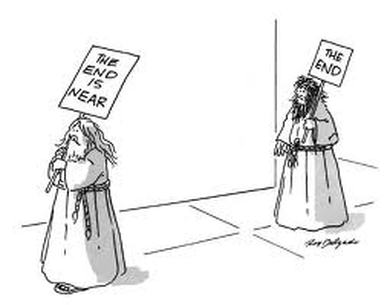
The world is not getting worse. It is really bad in some places and I want to fully acknowledge the very real suffering inflicted upon many but the world is not nearly as bad as we conservative Christians make it out to be. Yes, terrorism and wars are horrible, famine and plague kill millions, Israel is indeed surrounded, and we have indeed moved away from Christian morals in the west but a brief look at history will show us that, despite all of these things, the world is doing comparatively well.
Don't believe me? Let me ask you, are things really worse now than they were when the pagan emperors of Rome openly persecuted the early Church by shutting down businesses, looting homes, and murdering Christians in the streets (crucifixion and human torch style) and arena to the tumultuous cheers of the rest of the known world? Are things really as bad now as they were when Rome, after being transformed into the locus of Christianity and moral civilization, fell? Are things really as bad today as they were during the invasions of the Muslims, Mongols, and Huns or the Black Death that ravaged entire continents? Is the world really more precarious now than it was doing the Hundred Years War when Christians openly fought and killed each other? Are we really in more dire straights than during the The Civil War, the World Wars, and the Cold War when a palpable dread hung over every nation that the entire world might be consumed by fire and blood? I stamp my foot in defiance and say "no!"
Things are pretty good today when compared to the rest of our history. War is still terrible but it is isolated and there are counter measures and alliances in place to ensure that it doesn't get out of hand. We don't have to fear the Black Plague or Polio or any of the diseases that used to kill entire families and lay waste to cities. Persecution of Christians still exists in different parts of the world but not to the extent or approval of what the early Church suffered at the hands of Nero, Domitian, Trajan, Diocletian and others. The world as a global whole has become safer, kinder, healthier, more Christian (nearly everywhere outside North America) and more cozy today than its ever been before. So I ask by what metric is it worse?
The world is not teetering on the edge of self-destruction, the evils we see and hear about are the same evils that have always been with us. Human kind, apart from Christ, is morally destitute and that will always manifest in immoral behavior and anti-Christian philosophies that each generation of the Church has to deal with in their time. The world and the forces of the world are the same as they have ever been; fallen and rebellious but ultimately subservient to King Jesus. The devil has been defeated and no power or authority exists unless it be under Christ so what's all the fuss about?
 Why do we believe that the world is getting worse? There are a few reasons. We are more aware of what is going on in the world due to communication technology (TV, Internet, Newspapers). Our North American culture thrives on sensationalism which brings 'sensational things' to the forefront of every media outlet. Various denominations within Evangelical Christianity lean towards an over-realized eschatology where it is cool to predict the end times and the widespread death and devastation after The Rapture as predicted in a literal reading of Revelation is cause for excitement and celebration. The older generations have a difficult time processing the rapid change and information overload that has only been getting faster and bigger every year. The biggest factor though probably the cultural shift away from Constantinian Christendom into Humanist Secularism. When conservative Christians firmly believe that the world is getting worse I think what we really mean is that North American culture no longer recognizes the Bible understood by Christian principles to be an authority to live by. In the past this has lead to a culture of fear, specifically in the United States, and moral panic that brought about the prohibition, a crackdown on creative license, literal witch hunts, and blaming popular entertainment (from movies to tabletop to video games) as morally corrupting our youth, encouraging Satanism, and, among other things, bringing about the immanent apocalypse.
I don't like this sort of pious perturbedness because it leads to a stunted spirituality. It often misses the mark by passing judgement upon the world, passing false judgement upon ourselves, fear mongering, and using up energy and resources where they are spent in vain.
But it's not.
Don't believe me? Let me ask you, are things really worse now than they were when the pagan emperors of Rome openly persecuted the early Church by shutting down businesses, looting homes, and murdering Christians in the streets (crucifixion and human torch style) and arena to the tumultuous cheers of the rest of the known world? Are things really as bad now as they were when Rome, after being transformed into the locus of Christianity and moral civilization, fell? Are things really as bad today as they were during the invasions of the Muslims, Mongols, and Huns or the Black Death that ravaged entire continents? Is the world really more precarious now than it was doing the Hundred Years War when Christians openly fought and killed each other? Are we really in more dire straights than during the The Civil War, the World Wars, and the Cold War when a palpable dread hung over every nation that the entire world might be consumed by fire and blood? I stamp my foot in defiance and say "no!"
Things are pretty good today when compared to the rest of our history. War is still terrible but it is isolated and there are counter measures and alliances in place to ensure that it doesn't get out of hand. We don't have to fear the Black Plague or Polio or any of the diseases that used to kill entire families and lay waste to cities. Persecution of Christians still exists in different parts of the world but not to the extent or approval of what the early Church suffered at the hands of Nero, Domitian, Trajan, Diocletian and others. The world as a global whole has become safer, kinder, healthier, more Christian (nearly everywhere outside North America) and more cozy today than its ever been before. So I ask by what metric is it worse?
The world is not teetering on the edge of self-destruction, the evils we see and hear about are the same evils that have always been with us. Human kind, apart from Christ, is morally destitute and that will always manifest in immoral behavior and anti-Christian philosophies that each generation of the Church has to deal with in their time. The world and the forces of the world are the same as they have ever been; fallen and rebellious but ultimately subservient to King Jesus. The devil has been defeated and no power or authority exists unless it be under Christ so what's all the fuss about?
I don't like this sort of pious perturbedness because it leads to a stunted spirituality. It often misses the mark by passing judgement upon the world, passing false judgement upon ourselves, fear mongering, and using up energy and resources where they are spent in vain.
Passing Judgment upon the World
As Christians we are not supposed to judge the world, that is God's business, we are to judge each other in love in order that we may know Christ more fully. (1 Cor 5:9-13) That the world is corrupt is no reason to be upset because the world has been corrupt since humankind ate the forbidden fruit in the garden of Eden and will continue to be corrupt until Christ reforms it anew. To lament the state of the world is to share in God's heart, to be weary of the world is part of your citizenship in God's kingdom, but to judge the world is to act in the place of God which neither you nor I were not created for.Passing False Judgement upon Ourselves
When we spend time grumbling among each other about how bad the world is and how evil the days are it becomes easy to forget that we also do bad things and are sinful. We can fall into feeling morally superior in a feigned holy helplessness and the root of pride is nourished by our watering it. In a strange spiritual paradox it is possible that in despising the world one becomes more worldly and looks to his own self righteousness instead of Christ's righteousness imputed to you. In this way being piously perturbed can lead falsely judging ourselves.Fear Mongering
The Kingdom of God is built not built upon fear, but when we become obsessed with pronouncing evil the world is we are often trying to bolster the Kingdom through fear tactics. There is a godly fear which is vital to faith and is brought about as a conviction of the Holy Spirit but there is also plenty of common fear which, even though it may be steeped in Biblical language, is just fear mongering. What benefit is there in getting everyone all worked up about how you believe we're all going to Hell in a hand basket? This sort of fear spreading is inappropriate for a Christian because "God has not given us a spirit of fear but of power and love and a sound mind," (2 Tim 1:7). It damages a brother or sister's soul to be in fear of the world. The natural growth of a Christian is towards Christ in faith but fear distracts and redirects growth away from Christ. Fear tactics do not work in God's Kingdom because fear tactics are of this world and God's Kingdom is not of this world. It is by faith in Christ that we overcome trials and fears because Christ is the one who has overcome the world. So there is a better way of dealing with the evils of the world, it is to walk humbly with your God, casting all your fears upon him because he cares for you, and in every situation, by prayer and petition and thanksgiving, present your requests to God. (John 16:33; Micah 6:8 1 Peter 5:7; Phil 4:6)Resources Spent in Vain
Much ink, breath, sweat, blood, and tears have been spent upon trying to legislate morality or spread the word about whatever new travesty threatened Christian society. Even if these methods were effective (and they are not) those who are piously perturbed would never be satisfied because as soon as one travesty has been abolished three more take its place. For the complainer there is always something to complain about, even if there is really nothing to complain about. The sort of pious perterbedness I am writing about works the same way. It is not possible to remove the darkness by attempting to stomp on it or point a finger at it or shovel it out one bucket at a time. We have been called into God's work of being the light of the world and it is only in living by faith in Christ that this light shines.
So in conclusion let all Christians look to Christ in humble faith not fearing the world though it be fearsome. The world and all that is in it are subject to Christ. He allows some things to happen and forbids others. Things will never get out of control because he is in control of all things. What is more, though God be almighty and transcendent he is available, nay, imminently involved in the lives of his people, from the life and death scenarios around the world to the common and mundane things.
Thoughts? Please voice them in the comments below.
Greg Out.
Thoughts? Please voice them in the comments below.
Greg Out.
Wednesday, August 26, 2015
Web Development part 3: Into the WordPress
I finished another track on Team Treehouse, specifically working with the PHP programming language. There is lots more for me to discover as this was just an introduction, but I decided to take a detour to explore their content concerning WordPress, a popular blogging and website creation tool. I've only just scratched the surface but I am already impressed and mostly convinced that I should just use WordPress for creating most simple websites. It's easy to use, customizable if you know how to code (and I do), powerful, and super easy for a non-tech savvy client to upkeep and add to once a website has been created. It's also free to use, so that's a good thing since my current budget is about $0.
WordPress comes with loads of free designs which save having to create them from scratch. Pick a theme, plunk in the content, tweak it by changing colors + pictures, and "Ta-da"a good looking functional website... at least that's what the process looks like from my current bedazzled perspective. I'm sure it can't be quite as easy as that, else nobody would hire freelancers to do the work for them.
If nothing else the friendly user interface is enough to keep me invested. Instead of having the client have to go into the HTML and CSS code (where it can be confusing and easy to break things) to add / change content WordPress gives them a nice text editor with a publish or edit button. Definitely a good feature for a church website or small business.
So it looks like I'm going to add WordPress to my digital tool belt. Yay WordPress!
Greg Out.
WordPress comes with loads of free designs which save having to create them from scratch. Pick a theme, plunk in the content, tweak it by changing colors + pictures, and "Ta-da"a good looking functional website... at least that's what the process looks like from my current bedazzled perspective. I'm sure it can't be quite as easy as that, else nobody would hire freelancers to do the work for them.
If nothing else the friendly user interface is enough to keep me invested. Instead of having the client have to go into the HTML and CSS code (where it can be confusing and easy to break things) to add / change content WordPress gives them a nice text editor with a publish or edit button. Definitely a good feature for a church website or small business.
So it looks like I'm going to add WordPress to my digital tool belt. Yay WordPress!
Greg Out.
Sunday, August 16, 2015
Concerning Good verses Evil - There is no Dualism
I've written about this topic before, but it came to mind again and perhaps deserves a new context of explanation. In Christian belief we hold that there is good and evil in the world. Good is championed by God who is made manifest to us through Jesus by the power of the Holy Spirit. Evil is championed by a being that the Bible identifies as Satan. This is not a new idea for us in North America, popular culture still repeats the idea of God being the good guy dressed in white up in Heaven that the Devil being the bad guy dressed in red (or black) down in Hell. God has angels who are on his side and the Devil has demons who are on his side and the two sides war against each other. There is a parallel between Christianity and this understanding of good verses evil in pop culture spirituality.
The key point of difference is the extent of the power struggle between the two sides. Pop culture spirituality along with most non-Christian spirituality envision the forces of good and evil to be like celestial boxing match where either opponent could gain the upper hand and knock the other out. Take this cutscene from Blizzard's Diablo III as an example:
Are angels more powerful than demons? Will the Devil foil God's plan in the world? For someone with a spiritual awareness outside Christianity these are very real questions. All over the world people turn to magic, karma, holy relics, or hardened self determination to ensure that good remains more powerful than evil whether that be in an unseen spiritual realm, within one's own heart and mind, or in trying to control what could be called "fate." Even Christians sometimes think and act this way as though the amount of people praying somehow empowered the angels against the demons or made God more favorable towards the outcome you were hoping for.
This is not how the Bible envisions the struggle between good and evil. God and the Devil are not in a balance of force as though God were the incarnation of good and the Devil were the incarnation of evil. God is sovereign of the universe and holds good and evil in his hand. The Devil is a fallen creature who being created by God will always be subservient to God which is why Jesus is able to drive him and all his demons away with a word and why with just a word he is able to cast them into a lake of fire and keep them there forever. The Devil may be the baddest guy on the block, but he's no equal to God and he's not evil incarnate. There is no question as to who is more powerful or who would win in a fight. The battle, if it could be considered a battle, could be illustrated by Gandalf leading the Rohirrim in the battle of Helm's Deep. No casualties for good, entire army of evil obliterated.
The key point of difference is the extent of the power struggle between the two sides. Pop culture spirituality along with most non-Christian spirituality envision the forces of good and evil to be like celestial boxing match where either opponent could gain the upper hand and knock the other out. Take this cutscene from Blizzard's Diablo III as an example:
Are angels more powerful than demons? Will the Devil foil God's plan in the world? For someone with a spiritual awareness outside Christianity these are very real questions. All over the world people turn to magic, karma, holy relics, or hardened self determination to ensure that good remains more powerful than evil whether that be in an unseen spiritual realm, within one's own heart and mind, or in trying to control what could be called "fate." Even Christians sometimes think and act this way as though the amount of people praying somehow empowered the angels against the demons or made God more favorable towards the outcome you were hoping for.
This is not how the Bible envisions the struggle between good and evil. God and the Devil are not in a balance of force as though God were the incarnation of good and the Devil were the incarnation of evil. God is sovereign of the universe and holds good and evil in his hand. The Devil is a fallen creature who being created by God will always be subservient to God which is why Jesus is able to drive him and all his demons away with a word and why with just a word he is able to cast them into a lake of fire and keep them there forever. The Devil may be the baddest guy on the block, but he's no equal to God and he's not evil incarnate. There is no question as to who is more powerful or who would win in a fight. The battle, if it could be considered a battle, could be illustrated by Gandalf leading the Rohirrim in the battle of Helm's Deep. No casualties for good, entire army of evil obliterated.
For the Christian the question isn't "how do I ensure that good remains stronger than evil," because God is already victorious! The question is "how do I continue to live in God's victory?" After all, before Gandalf arrived on the scene the defenders of Helms Deep weren't doing so well. Of this the Bible has much to say. In the Old Testament it was to have faith in Yahweh your God according to his actions in making a covenant with Abraham, leading the people of Israel out of Egypt, driving the Canaanites out of the Promise Land, and providing for those who trusted in him. This faith in Yahweh culminated in his incarnation as Jesus and defeated evil in his life ministry (healing and exorcisms), death (identifying with fallen humanity and paying the price for our sins) and resurrection (defeating death and sin championing both). Before Jesus ascended he told his followers that he would give them his spirit, the Holy Spirit, and it is by living in accordance with the Holy Spirit that they and we are able to participate in God's victory over evil. The apostle Paul constantly instructed the early Church to live according to the Holy Spirit and not according to the evil desires of the flesh. By submitting to God and allowing his Holy Spirit to guide you his goodness lives in you and you are living in God's victory.
Wednesday, August 12, 2015
Web Development: part 2
I learned something about web development that makes my head spin a little. Way back in the dark ages of the internet (1999) web developers built everything from the base elements of HTML, CSS, JavaScript, PHP, and probably a few others I don't know about yet. The point is that they built everything from scratch typing it up from a digital ex nihilo (out of nothing). So far, this is how I have been learning to code, either starting with a blank file or using a pre-made template that was created the ex nihilo method. This way of coding makes sense to me, it is relatively straight forward albeit time consuming.
Then I learned that this is not how web development works anymore. Nobody just codes everything from scratch. Over time coding languages evolved and web developers put together entire libraries of commands and alternate languages that take the base elements of coding and turn things that would take 10 lines of code into 1 line of code.
Here is a popular example that illustrates my point.
How to change the background color in JavaScript (base programming language)
Function changeBackground(color) {
Document.body.style.background = color;
}
Onload="changeBackground ('red');"
Now here's that same code again but this time in JQuery (library that manipulates JavaScript)
$ ('body') .css ('background', 'red');
Alright, so now there are shortcuts that make coding quicker and easier, that's cool right? Well yes, it's very cool. So what's the problem then? The problem is that there are so many powerful libraries and alternate languages out there today that simply managing them has become a paramount skill for success in the industry and its a skill I don't have yet. The more code I see for websites the more I see that they are built off of lists of enormous libraries of commands that I have absolutely no understanding of.
I saw this first a few days ago training in PHP on Team Treehouse. I was walking through the construction of a functional website and the first half of the lesson was simply installing all of the extra libraries we would use. Heck even the libraries were inside a library that needed to be installed before we could begin! Then we started to utilize all these extra pre-made functions in the code and the magic started. Instead of having to code the sanitization of user input myself (would easily take up 100 lines of code) the instructor called the 'sanitize input' function from one of the libraries with one line of code. Instead of creating our own code for sending emails he just referenced 'quick mailer' and hours of troubleshooting turned into 4 lines of code that will work every time. Then things got even crazier when he moved every piece of code that was repeated between different pages, deleted it all from those pages, and brought it all back with 2 lines of code that referenced back to the saved template so that every new page on the site could be created in seconds and any changes could be made equally as fast.
So web development isn't about being able to code, although that is still a necessary skill, it is now more about knowing what tools (libraries and languages) are out there and when / how to use them. Any web page can be created any number of ways, there is rarely ever a single right way to reach your destination (true in programming, not so much in theological matters) the key is knowing how to get there efficiently and with solid code.
So I have more learning to do. I need to become familiar with importing libraries and reading the documentation for how to use them. I find the documentation to be the most intimidating part. I barely know what I'm looking for and scanning the hundreds of functions for the one or few that would accomplish what I need is like finding a needle in a haystack except the needle is proverbial and the haystack is on fire... or something like that...
And now I hear my two year old son is up to mischief...
Greg Out.
Then I learned that this is not how web development works anymore. Nobody just codes everything from scratch. Over time coding languages evolved and web developers put together entire libraries of commands and alternate languages that take the base elements of coding and turn things that would take 10 lines of code into 1 line of code.
Here is a popular example that illustrates my point.
How to change the background color in JavaScript (base programming language)
Function changeBackground(color) {
Document.body.style.background = color;
}
Onload="changeBackground ('red');"
Now here's that same code again but this time in JQuery (library that manipulates JavaScript)
$ ('body') .css ('background', 'red');
Alright, so now there are shortcuts that make coding quicker and easier, that's cool right? Well yes, it's very cool. So what's the problem then? The problem is that there are so many powerful libraries and alternate languages out there today that simply managing them has become a paramount skill for success in the industry and its a skill I don't have yet. The more code I see for websites the more I see that they are built off of lists of enormous libraries of commands that I have absolutely no understanding of.
I saw this first a few days ago training in PHP on Team Treehouse. I was walking through the construction of a functional website and the first half of the lesson was simply installing all of the extra libraries we would use. Heck even the libraries were inside a library that needed to be installed before we could begin! Then we started to utilize all these extra pre-made functions in the code and the magic started. Instead of having to code the sanitization of user input myself (would easily take up 100 lines of code) the instructor called the 'sanitize input' function from one of the libraries with one line of code. Instead of creating our own code for sending emails he just referenced 'quick mailer' and hours of troubleshooting turned into 4 lines of code that will work every time. Then things got even crazier when he moved every piece of code that was repeated between different pages, deleted it all from those pages, and brought it all back with 2 lines of code that referenced back to the saved template so that every new page on the site could be created in seconds and any changes could be made equally as fast.
So web development isn't about being able to code, although that is still a necessary skill, it is now more about knowing what tools (libraries and languages) are out there and when / how to use them. Any web page can be created any number of ways, there is rarely ever a single right way to reach your destination (true in programming, not so much in theological matters) the key is knowing how to get there efficiently and with solid code.
So I have more learning to do. I need to become familiar with importing libraries and reading the documentation for how to use them. I find the documentation to be the most intimidating part. I barely know what I'm looking for and scanning the hundreds of functions for the one or few that would accomplish what I need is like finding a needle in a haystack except the needle is proverbial and the haystack is on fire... or something like that...
And now I hear my two year old son is up to mischief...
Greg Out.
Monday, August 10, 2015
Web Development part 1
A little over a year ago the web designer for Briercrest College and Seminary casually suggested that I go into web design. We had brushed shoulders off and on for a good five years and he figured that I had the personality and tech-savvy to join the ranks of the internet wizards and build websites like he did. The idea intrigued me. I had always enjoyed working with computers and I was able to figure out basic HTML and CSS all by myself to fix the Distance Education website. I asked him for more details and he introduced me to the ultimate website for learning all things Web Development related: Team Treehouse. He said it was a lucrative business once you knew your stuff and that he had several projects that he worked on in the evenings that paid $20 an hour.
"Not bad," I thought to myself. Then he told me that that was the price he used for Churches and non-profit organizations and that a professional web developer could charge upwards of $75 per hour!
Holy Smokes! That can't be right... I did some fact checking... yep... $75 per hour...
I told him that I was indeed interested and thought I could maybe pick it up as a secondary income once I finished my masters degree and the insanity of being a new parent wore off. Months went by and I would check in with my web developer friend for more details every now and again. The prospects sounded better all the time. It paid well, I would get to set my own hours, I could work from home if I needed to, and it was interesting work that would keep my brain engaged. Someday I would do it.
Then I received word that my position with Distance Education was being cut. With a thesis still to finish and no other employment in sight I tried out the free trial at Team Treehouse and ploughed through HTML, CSS, and started into JavaScript. I was able to build a simple church website and had people asking me what I charged within a month. Unfortunately I only knew the very basics and did not feel that my humble abilities were adequate to charge money. There was also the time constraints of my thesis and the unique health challenges posed by our second pregnancy. In the end family needs and thesis prevailed and web development was put on hold.
Half a year later my masters degree is finished, our second child is healthy, and I have recovered enough to take it up again. It's only been a week and I've blasted through the remainder of the Front End Development track on Team Treehouse and completed half of the PHP track. I'm learning lots in leaps and bounds and it is terrifying. Every time I learn something new it feels like I've put another block onto my tower. I've always been really good at building block towers but the taller they are the more wobbily they get and I start to feel like it will all fall apart. Now that I know the basics I'm being introduced to a whole new layer of apps and libraries that I had no idea even existed. Three or four systems I could handle but add to that a dozen extras from UNIX to Composer to Twig and I feel like I'm still at the bottom while also feeling like my tower is too wobbily. But then I look at other websites and know how I could make them myself. I think I'm almost ready to start doing this as a business and I'll keep learning and growing along the way.
"Not bad," I thought to myself. Then he told me that that was the price he used for Churches and non-profit organizations and that a professional web developer could charge upwards of $75 per hour!
Holy Smokes! That can't be right... I did some fact checking... yep... $75 per hour...
I told him that I was indeed interested and thought I could maybe pick it up as a secondary income once I finished my masters degree and the insanity of being a new parent wore off. Months went by and I would check in with my web developer friend for more details every now and again. The prospects sounded better all the time. It paid well, I would get to set my own hours, I could work from home if I needed to, and it was interesting work that would keep my brain engaged. Someday I would do it.
Then I received word that my position with Distance Education was being cut. With a thesis still to finish and no other employment in sight I tried out the free trial at Team Treehouse and ploughed through HTML, CSS, and started into JavaScript. I was able to build a simple church website and had people asking me what I charged within a month. Unfortunately I only knew the very basics and did not feel that my humble abilities were adequate to charge money. There was also the time constraints of my thesis and the unique health challenges posed by our second pregnancy. In the end family needs and thesis prevailed and web development was put on hold.
Half a year later my masters degree is finished, our second child is healthy, and I have recovered enough to take it up again. It's only been a week and I've blasted through the remainder of the Front End Development track on Team Treehouse and completed half of the PHP track. I'm learning lots in leaps and bounds and it is terrifying. Every time I learn something new it feels like I've put another block onto my tower. I've always been really good at building block towers but the taller they are the more wobbily they get and I start to feel like it will all fall apart. Now that I know the basics I'm being introduced to a whole new layer of apps and libraries that I had no idea even existed. Three or four systems I could handle but add to that a dozen extras from UNIX to Composer to Twig and I feel like I'm still at the bottom while also feeling like my tower is too wobbily. But then I look at other websites and know how I could make them myself. I think I'm almost ready to start doing this as a business and I'll keep learning and growing along the way.
Wednesday, July 29, 2015
On Social Networking
I am generally not the most socially savvy person in a room. It's an area I've wanted to improve for some time but haven't had any concrete direction on how to do that. Well, this morning I accidentally took a course on Social Networking while on Team Treehouse learning how to Freelance and I learned a lot of important things.
From a business perspective it is a very good strategy to take full advantage of social networking. Creating, locating, and re-posting relevant content will naturally attract people who are interested in what you are talking about. Do this consistently enough and people will follow you online and look to you as an authority on whatever thing you are talking about. Translate this into career or business language and it's a powerful tool for advancement in a field as well as convincing prospective customers to give your their information and buy from you. It's generating revenue by doing what you love and sharing it.
Now I'm still currently unemployed and am looking at starting up my own freelance web design business (how I stumbled onto this information) and so the marketing strategy outline was interesting in its own right, but I now also find myself looking at social media significantly different on a personal level. I love theology. I have not found an appropriate medium to practically use and hone my skills in theology. Why not social media? Why not blog about it? Why not find and follow other theologians? Why not create, locate, and re-post relevant theological material? I don't have to be hired to do what I love, but doing what I love will probably get me hired one day to continue doing what I love. I seriously never saw this before and now the light bulb has gone off and I wonder at how dull I've been.
I have also come to a realization about blogging. I've been doing it incorrectly. This blog has served as a hodge podge soup of the sort of things I enjoy writing about whether its theology, video games, parenthood, funny stories, or whatever academic topic I was engaged in. If I want to pursue theology for real then I must have a blog dedicated to the creation of theological material, not an electronic journal with theological nuggets buried under layers of other things. I look at my uncle Randy's blog MinistryLift and see how consistency and his creation of material has shaped his career as a key leadership trainer in the Church in Canada and around the world.
Perhaps, if time allows, I will create several blogs, each dedicated to a key interest. Theology because it is what I want to do, Web Design because it will be a business to either live off of or at the very least generate a supplementary income, and gaming because it has been my life-long my hobby.
In any case I will have to create a new theology focused blog and start intentionally engaging on social networks.
And here's an afterthought to show how powerful connecting like this can be. Our cat Sherlock was stuck up a tree for three days unable to get down. I called veterinary clinics, pet hospitals, and the SPCA but nobody could offer any help. (The days of the Fire Department coming down for a cat rescue are pretty much gone unless you live in a rural area). I leveraged Facebook to my cause by posting pictures of the pathetic animal slowly dying in the heat and family and friends shared it on their profiles for others to see. Within a few hours we received a call from someone who knew a professional tree climber and this morning the kitty was saved!
So yeah. Social media. Personal revelations. Good stuff. Greg Out.
From a business perspective it is a very good strategy to take full advantage of social networking. Creating, locating, and re-posting relevant content will naturally attract people who are interested in what you are talking about. Do this consistently enough and people will follow you online and look to you as an authority on whatever thing you are talking about. Translate this into career or business language and it's a powerful tool for advancement in a field as well as convincing prospective customers to give your their information and buy from you. It's generating revenue by doing what you love and sharing it.
Now I'm still currently unemployed and am looking at starting up my own freelance web design business (how I stumbled onto this information) and so the marketing strategy outline was interesting in its own right, but I now also find myself looking at social media significantly different on a personal level. I love theology. I have not found an appropriate medium to practically use and hone my skills in theology. Why not social media? Why not blog about it? Why not find and follow other theologians? Why not create, locate, and re-post relevant theological material? I don't have to be hired to do what I love, but doing what I love will probably get me hired one day to continue doing what I love. I seriously never saw this before and now the light bulb has gone off and I wonder at how dull I've been.
I have also come to a realization about blogging. I've been doing it incorrectly. This blog has served as a hodge podge soup of the sort of things I enjoy writing about whether its theology, video games, parenthood, funny stories, or whatever academic topic I was engaged in. If I want to pursue theology for real then I must have a blog dedicated to the creation of theological material, not an electronic journal with theological nuggets buried under layers of other things. I look at my uncle Randy's blog MinistryLift and see how consistency and his creation of material has shaped his career as a key leadership trainer in the Church in Canada and around the world.
Perhaps, if time allows, I will create several blogs, each dedicated to a key interest. Theology because it is what I want to do, Web Design because it will be a business to either live off of or at the very least generate a supplementary income, and gaming because it has been my life-long my hobby.
In any case I will have to create a new theology focused blog and start intentionally engaging on social networks.
And here's an afterthought to show how powerful connecting like this can be. Our cat Sherlock was stuck up a tree for three days unable to get down. I called veterinary clinics, pet hospitals, and the SPCA but nobody could offer any help. (The days of the Fire Department coming down for a cat rescue are pretty much gone unless you live in a rural area). I leveraged Facebook to my cause by posting pictures of the pathetic animal slowly dying in the heat and family and friends shared it on their profiles for others to see. Within a few hours we received a call from someone who knew a professional tree climber and this morning the kitty was saved!
So yeah. Social media. Personal revelations. Good stuff. Greg Out.
Thursday, June 18, 2015
Turned Down Again
Alright, so one of the challenges of moving and starting up in another province is finding work. I know that the Lord holds all things together and gives us all what we need at the appointed time, and that his timing is better than my timing and his ways are higher than my ways and that if I really believed this then I should just take the time to worship and rest... but here I am, frustrated at being unable to find work.
I don't think anyone is judging me, but I don't want look a fool for spending ten years in education only to come out with 0 qualifications and needing to work a crap job with a crap wage to barely scrape by paying rent for a low income home and cheap food. This would probably be my fate if God weren't God. Thankfully He is.
But it is still frustrating to spend months sending out resumes and talking to people only to be turned down yet again. Higher Education is required for a lot of things, but I think it's a black mark for everything else and unless you have the right connections it is virtually impossible to break into the job market without losing your integrity. Case and point, United Truss. My father in law saw they were looking for help building trusses, so I applied. I didn't care what the job was, so long as it was an income and I didn't think that anyone short of a streaking drug addicted murderer could be turned down from such a position. After calling, sending a resume, filling out the required forms, and a phone interview that sounded promising I found a message in my inbox this morning that politely squashed my aspirations explaining that they didn't think they could offer the sort of work I was looking for; as though they were looking out for my best interests by refusing to let me do manual labor. I could have gotten the job if I had lied I suppose.
"So Mr. Wollf, I see you have done a lot of office work and that you have a masters degree in theology, how do you feel about manual labor?"
"O man, I love working with my hands, it's definitely my first choice, I love the structure of repetitive tasks all day long and I absolutely love monotony. Jesus was a carpenter and I want to be just like Jesus!"
Nope... I was candid. "I know that I can do manual labor but it's not my first choice. I don't like monotony but hey, I can put up with anything if it means I am able to pay rent and feed my family."
Although not the ideal fit I WAS relying on this opportunity to come through for me because it was the most positive and well paying lead yet. Well... at least I don't have to worry about work obligations while Tori recovers from the upcoming delivery of our second child.
Back to square one though. Trusting the Lord will provide for our needs.
Greg Out.
I don't think anyone is judging me, but I don't want look a fool for spending ten years in education only to come out with 0 qualifications and needing to work a crap job with a crap wage to barely scrape by paying rent for a low income home and cheap food. This would probably be my fate if God weren't God. Thankfully He is.
But it is still frustrating to spend months sending out resumes and talking to people only to be turned down yet again. Higher Education is required for a lot of things, but I think it's a black mark for everything else and unless you have the right connections it is virtually impossible to break into the job market without losing your integrity. Case and point, United Truss. My father in law saw they were looking for help building trusses, so I applied. I didn't care what the job was, so long as it was an income and I didn't think that anyone short of a streaking drug addicted murderer could be turned down from such a position. After calling, sending a resume, filling out the required forms, and a phone interview that sounded promising I found a message in my inbox this morning that politely squashed my aspirations explaining that they didn't think they could offer the sort of work I was looking for; as though they were looking out for my best interests by refusing to let me do manual labor. I could have gotten the job if I had lied I suppose.
"So Mr. Wollf, I see you have done a lot of office work and that you have a masters degree in theology, how do you feel about manual labor?"
"O man, I love working with my hands, it's definitely my first choice, I love the structure of repetitive tasks all day long and I absolutely love monotony. Jesus was a carpenter and I want to be just like Jesus!"
Nope... I was candid. "I know that I can do manual labor but it's not my first choice. I don't like monotony but hey, I can put up with anything if it means I am able to pay rent and feed my family."
Although not the ideal fit I WAS relying on this opportunity to come through for me because it was the most positive and well paying lead yet. Well... at least I don't have to worry about work obligations while Tori recovers from the upcoming delivery of our second child.
Back to square one though. Trusting the Lord will provide for our needs.
Greg Out.
Friday, June 12, 2015
Life of a Dad: Max and Ruby
So once you're the parent of a two year old you start to get acquainted with some of the TV shows and movies that your kid likes to watch. You may not get to see the shows in question from end to end because life is nuts and you have grown up things to do but after the show has been run about twelve dozen times you are probably piecing it together in your sleep and against your will. Case and Point, Max and Ruby; a strange children's show about two bunnies who live in a house in a town of other bunnies. Ruby is seven and Max is four and every episode I've seen involves the two of them competing for worldview dominance in who will play what game. You would think that this could be an opportunity for children to see good sibling relationship and conflict resolution at work... instead you get a checklist of how NOT to raise your children. My personal theory is that Max and Ruby are either very evil and dangerous murdering bunnies or they are a delusion inside Ruby's mind.

Let's start with the "Max and Ruby are Evil" theory. Max is evil. This is a generally accepted theory on the internet. He gets this look on his face which may have originally been supposed to communicate mischief, but it's become an internet meme for purposeful acts of evil... Ruby says stay put, Max runs off. Ruby explains that she needs to sell chocolate bars and Max eats one from every box making them unsaleable and wasting as much as possible. Ruby is innocently playing with her friend and Max sends his obnoxiously noisy truck / car toys to stop their game. For a four year old boy he is already will acquainted with trolling and psychological warfare.

Then there's Ruby, the micromanaging and nagging older sister whose overactive imagination and lack of life experience result in frequent life threatening situations for Max. In one episode she leaves Max alone outside while she talks to her dolls, Curly Shirley, Tooth Fairy, and Rapunzel about what they would like to eat for breakfast while her four year old brother hops in his toy car, leaves the yard, drives down the road, over a bridge (river underneath) and over to grandma bunny's house for ice cream. In another episode Max says that he is hungry but she sees that he has food all over his mouth and decides he needs a bath. She leaves him alone in the bathtub to go get toys, bath robes, and towels while Max tries to eat his sherbet in a drowning hazard. Then there's the episode where Ruby and her friend essentially kidnap Max from his playing markers and force him to play doctor with them, making him stay in bed for a sickness he doesn't have. Other parents only find Ruby annoying. I say she should be taken away by bunny services for woeful neglect and abuse!
Then there is the issue with their parents. As far as anyone can tell they either packed up and left or are dead. They never appear in any episodes, are never talked about, and other young bunnies have parents so it's not as though this bunny world is a Never Land only full of children. Their absence explains some of Ruby's micromanaging tendencies as she attempts to both play mommy and be mommy at the same time. It also explains Max's developmental delay as he is functionally mute except for one or two words every so often. So what happened to their parents? Well Max is evil so maybe he killed them. Maybe he put his toys on the stairs or dropped a bowling ball on their heads while they slept or chased them around with a knife after locking all the doors while Ruby played outside with her dollies. Maybe Ruby killed them. She is oblivious to common sense things and prefers to stay in her own little play world where others take on whatever role she imagines for them. Maybe she left electronics in the bathtub and forgot about them or baked a cake with bunny poison instead of baking soda. Maybe mother and father bunny asked for her help in sorting out a piece of machinery but she went off to play games with her friends and wasn't around to turn something off.
Maybe nobody says anything because they are afraid that they might be next.
Then there is the delusion theory. What if everything is just pieces of Ruby's fractured mind and she's actually hallucinating in a mental asylum. It would explain why the animation style is so... disjointed, because nothing is actually real. The bunnies and their toys are drawn like you would expect any cartoon, but the backgrounds appear to be computer generated with varying levels of texture fidelity. The houses and furniture have depth but the characters do not and look like paper cut-outs. The trees and vegetation in the background look like a seven year old copy / pasted and cut out different textures in MS Paint before dropping them into the scene.

In any case, I am not the first or only one to suggest that Max and Ruby are either evil or a delusion. If you enjoy some horror fiction then check out Creepy Pasta's story in the hidden Max and Ruby DVD...
Sunday, May 3, 2015
Goodbye Caronport: Out into the Great Unknown
I had intended to write an epic story about our trip, but I have been so tired and mentally drained that it just isn't going to happen. The short notes are going to have to suffice.
We had quite a journey. The day after
graduation Victoria, Jonathan, Sherlock, and myself hopped in the car and traveled
from Caronport to Orillia, over 2600 Km. Bruce and Tracey lead the way with the
26 footer U-haul truck filled with all our worldly possessions.
Day One: Caronport to Headingly.
Stopped at Moosomin Tim Hortons. Windy. Cold. Chicken Sandwiches, Trail Mix,
Fruit. Motel 6: Super Windy, Miserably cold. Evil Bed Sheets.
Day Two: Headingly to Dryden.
Colder. Windy. Fruit, Trail Mix. Road closed behind us around Brandon due to
bad weather. Highway closes ahead of us (flooding), stranding us at Dryden. No other traces of civilization for five hours in any direction. We stay at Best Western hotel. Excellent room. Bar and Grill
Supper, Tori gets yummy yummy steak sandwich and the bed doesn't try to kill
her. Connected rooms. Everything is really good.
Day Three: Road cleared up. Dryden
to Long-lac. Snow, scenery covered in snow. Lunch / Supper at Swiss Chalet at
Swift Current. We turned off on the #11 highway instead of #17 which took us
north instead of south. It was longer but flat for the moving truck. ¾ inch
thick ice from hood to bumper. Worst hotel room. The
beds were hard, the bedsheets tried to kill Victoria, the door wouldn't close
right, the fridge would bite you if you tried to open it, the bathroom was very
loud... not a good night.
Day
Four: Long-lac to Orillia. Started early. Evil portapotty. Coffee Time building. Road
Construction. Supper at Swiss Chalet in North Bay. Decided to travel on through
the dark instead of staying at another hotel. Snow, Rain, and ice. Accident
occurs somewhere behind us closing the road. We reach Bruce and Tracey’s house.
Jonathan goes nuts over Spook. Spook sniffs Sherlock. Sherlock hisses at Spook.
Kess gets royally ticked off and barricades herself downstairs.
Jonathan did very well throughout the trip. Wouldn't want to do it again any time soon. Sherlock didn't make a sound and was content to sleep all day in his kennel and then behaved in the hotel rooms (mostly). I did alright with the driving. It was long but kinda fun. Tori's playlist on the i-pod helped a lot.
We were able to get into our house a week early and are now almost completely moved in a week later. Just had Bruce, Tracey, Cousin Will, GG, and her friend Jan out to help with yard work and then steak supper afterwards. Fixed the BBQ. Blew up the microwave. Found asparagus popping up out of the garden.
Will write more when feeling rested (hopefully).
Greg Out.
Wednesday, April 1, 2015
New Horizons
People come to Caronport to be trained and once their training is complete they disperse into the world in the name of Christ. Well, my training is complete and so we are dispersing. The Wollfs will be moving to Ontario on April 19th, one day after graduation.
It really is time to go. Caronport and area is inundated with graduated theology and biblical studies students who are more qualified than I am and the opportunities for employment based on said degrees is shrinking in this area. There are also few opportunities for Victoria to do what she loves (or anything at all) or services for our son (soon to be sons) to benefit from. And, of course, there are the hard memories embedded into Caronport that have made us long for a new start somewhere else. It is time to go.
Not quite sure where exactly we are going yet, but we will probably be staying with Victoria's folks and they are absolutely thrilled to put us up for as long as we need. That will be good. They adore there grandson and it will be nice to have them help take care of things, if only for a couple weeks. My hope is that we will have a place and a job to go to before we even head out but so far a full month of hard searching and applying hasn't yielded any results. We thought something ideal had popped up on the housing front, but now we are lead to believe that it was a scam. No money was lost but it is disappointing nonetheless. The housing market is not good right now what with inflated prices and the current fad of only renting out rooms (for students) instead of a full house which we need. Townhouses and Condos are also out because of the stairs. Tori has enough trouble with stability without a steep set of stairs to navigate and recovering from C-section... yeah we're not going to do that. Then there's the thorny issue of the cat. Most places do not want pets and while Ontario law makes it illegal to evict on the basis of owning a pet actually getting into a place and maintaining a non-stressful relationship with the landlord are different issues. On the job front I have sent out flurries of applications with no response from any of them.
So we are packing and cleaning a section of the house each day until the moving truck gets here. I have to say that I find it rather exciting. I hated moving as a child because I had to give up what I was familiar with and try to make new friends. Now I have no friends (they all moved away) and might be able to find new ones! (Hmm... that last line wasn't supposed to come out as depressing as it did. Oh well.) I am used to moving. I know how to pack, I know how to stack, and I am mentally prepared for the whole starting over thing. It's a welcome change of pace after grinding on a thesis and dealing with unemployment in the cold of winter.
Not sure what I will make of the three day car ride though. It's going to be more driving than I've ever done in my life by a long shot. I'm used to long drives out to BC but I was always a passenger. Not sure how I will do to drive. Maybe now is a good time to start experimenting with coffee... Our son will go from rear-facing to front-facing, so that will be exciting for everyone. Tori has been compiling playlists for the drive out. I hear the scenery is absolutely gorgeous but that there is no civilization or stopping points between Winnipeg and Thunder Bay. So yeah, a loooong trip with my pregnant wife, attention seeking son, and maybe a neurotic cat all within the same confined space for three, maybe four days. Hopefully I'll be able to write about it afterwards.
Every new horizon means that something else fades into the distance. I will miss my family, although everyone has webcams now so that will be good. I knew this time would come eventually. We all did. We've been savoring every get together for a few years now, wondering if it might be the last one with all of us nearby. I think my family is good with it. It will still be hard to leave, which is natural but necessary.
I have a few personal hopes for this new chapter. I hope my family can rest and recover from the hard times we've endured. I hope to see my soon to be newborn son delivered safely. I hope to see my wife thrive, able to go outside and do things without fear of injury or rejection. I hope to see our sons explore, learn, play, and thrive. I hope to find friends, people I can talk with, have over, play games with, and learn from. I hope to find a church where we can plug into, that isn't afraid of disabilities, and that we can begin serving at. I hope to find a job that will pay for the necessities of life. I hope to put away money for our sons' education later on, for a house, and for basic savings. I hope to use what I've learned here at Briercrest in the work place, in the church, and among our future circle of friends. Are these too much to ask for? I don't know, but I have been asking for them.
In the meantime it's back to packing and cleaning and attending to our family needs.
Greg Out.
It really is time to go. Caronport and area is inundated with graduated theology and biblical studies students who are more qualified than I am and the opportunities for employment based on said degrees is shrinking in this area. There are also few opportunities for Victoria to do what she loves (or anything at all) or services for our son (soon to be sons) to benefit from. And, of course, there are the hard memories embedded into Caronport that have made us long for a new start somewhere else. It is time to go.
Not quite sure where exactly we are going yet, but we will probably be staying with Victoria's folks and they are absolutely thrilled to put us up for as long as we need. That will be good. They adore there grandson and it will be nice to have them help take care of things, if only for a couple weeks. My hope is that we will have a place and a job to go to before we even head out but so far a full month of hard searching and applying hasn't yielded any results. We thought something ideal had popped up on the housing front, but now we are lead to believe that it was a scam. No money was lost but it is disappointing nonetheless. The housing market is not good right now what with inflated prices and the current fad of only renting out rooms (for students) instead of a full house which we need. Townhouses and Condos are also out because of the stairs. Tori has enough trouble with stability without a steep set of stairs to navigate and recovering from C-section... yeah we're not going to do that. Then there's the thorny issue of the cat. Most places do not want pets and while Ontario law makes it illegal to evict on the basis of owning a pet actually getting into a place and maintaining a non-stressful relationship with the landlord are different issues. On the job front I have sent out flurries of applications with no response from any of them.
So we are packing and cleaning a section of the house each day until the moving truck gets here. I have to say that I find it rather exciting. I hated moving as a child because I had to give up what I was familiar with and try to make new friends. Now I have no friends (they all moved away) and might be able to find new ones! (Hmm... that last line wasn't supposed to come out as depressing as it did. Oh well.) I am used to moving. I know how to pack, I know how to stack, and I am mentally prepared for the whole starting over thing. It's a welcome change of pace after grinding on a thesis and dealing with unemployment in the cold of winter.
Not sure what I will make of the three day car ride though. It's going to be more driving than I've ever done in my life by a long shot. I'm used to long drives out to BC but I was always a passenger. Not sure how I will do to drive. Maybe now is a good time to start experimenting with coffee... Our son will go from rear-facing to front-facing, so that will be exciting for everyone. Tori has been compiling playlists for the drive out. I hear the scenery is absolutely gorgeous but that there is no civilization or stopping points between Winnipeg and Thunder Bay. So yeah, a loooong trip with my pregnant wife, attention seeking son, and maybe a neurotic cat all within the same confined space for three, maybe four days. Hopefully I'll be able to write about it afterwards.
Every new horizon means that something else fades into the distance. I will miss my family, although everyone has webcams now so that will be good. I knew this time would come eventually. We all did. We've been savoring every get together for a few years now, wondering if it might be the last one with all of us nearby. I think my family is good with it. It will still be hard to leave, which is natural but necessary.
I have a few personal hopes for this new chapter. I hope my family can rest and recover from the hard times we've endured. I hope to see my soon to be newborn son delivered safely. I hope to see my wife thrive, able to go outside and do things without fear of injury or rejection. I hope to see our sons explore, learn, play, and thrive. I hope to find friends, people I can talk with, have over, play games with, and learn from. I hope to find a church where we can plug into, that isn't afraid of disabilities, and that we can begin serving at. I hope to find a job that will pay for the necessities of life. I hope to put away money for our sons' education later on, for a house, and for basic savings. I hope to use what I've learned here at Briercrest in the work place, in the church, and among our future circle of friends. Are these too much to ask for? I don't know, but I have been asking for them.
In the meantime it's back to packing and cleaning and attending to our family needs.
Greg Out.
Tuesday, March 31, 2015
Graduating
Well, it's official. I am going to graduate with my Masters of Theology degree on April 18 of this year. Wow. It's been a long haul. A lot has changed since I first started and I don't think I am the same person I was back then. I am a husband and a father, two wonderful titles I never thought I'd have until maybe after seminary was done. I became a DnD / GRURPS dungeon master, another title I never thought I would have. I was able to walk with my wife through pain and loss due to the school, disability, and bad health. I lost two deep friendships that I thought would last a lifetime. I pushed through my final courses, earning a high enough GPA to write a thesis which I also finished.
Yep, it's quite the list of accomplishments. My family, professors, and friends gush over me and are filled with joy and pride for what I have done, but I do not. I'm not sure if I have a distorted view of myself or if I am perhaps chronically tired or maybe depressed, but I do not feel much these days. I set out what I intended to do and then I did it. I am thankful for the chance to try and for everyone who partnered with me but I don't feel like the Masters degree is worth getting excited about. It is strange, as a freshman I looked up to people like myself now thinking they were theological superheroes. Now I'm a superhero and I am just tired. My degree doesn't mean much when my son yells and screams bloody blue murder every time I try to do something to deal with the exhaustion or pain. My degree hasn't provided my family with a safe place to live or a reliable income...
You know... looking at the direction of my writing I think I am dealing with at least a touch of depression. The thesis took a lot out of all of us and I haven't had a chance to really come down yet.
In any case, God is good. He will provide what we need. What is my degree good for? Why did I bother to get it? Because it is the completion of a firm foundation upon which I intend to build my family life, ministry, and career. If the foundation is good then the building is sound. I have been stretched to my limit out here in Caronport, and now I know where my limit is. I know that I am capable of more than I originally thought I was. I have the mental and academic skills and tools to go and do anything I want. My original dream of teaching at a small Bible school somewhere will probably have to wait since so many Bible schools are drying up these days, but I can be patient. In the mean time there are many local churches who could use my skills, giftings, and abilities which I intent to provide where ever we end up. Preaching, teaching, mentoring, participating in community, I am able to do all these things and more... given enough prep time of course.
So it is with a strange combination of lament, hope, numbness, and joy that I will be crossing the finish line. It's been a stormy season but the Lord leads true. Onward and ever forward in the name of Christ.
Amen.
Yep, it's quite the list of accomplishments. My family, professors, and friends gush over me and are filled with joy and pride for what I have done, but I do not. I'm not sure if I have a distorted view of myself or if I am perhaps chronically tired or maybe depressed, but I do not feel much these days. I set out what I intended to do and then I did it. I am thankful for the chance to try and for everyone who partnered with me but I don't feel like the Masters degree is worth getting excited about. It is strange, as a freshman I looked up to people like myself now thinking they were theological superheroes. Now I'm a superhero and I am just tired. My degree doesn't mean much when my son yells and screams bloody blue murder every time I try to do something to deal with the exhaustion or pain. My degree hasn't provided my family with a safe place to live or a reliable income...
You know... looking at the direction of my writing I think I am dealing with at least a touch of depression. The thesis took a lot out of all of us and I haven't had a chance to really come down yet.
In any case, God is good. He will provide what we need. What is my degree good for? Why did I bother to get it? Because it is the completion of a firm foundation upon which I intend to build my family life, ministry, and career. If the foundation is good then the building is sound. I have been stretched to my limit out here in Caronport, and now I know where my limit is. I know that I am capable of more than I originally thought I was. I have the mental and academic skills and tools to go and do anything I want. My original dream of teaching at a small Bible school somewhere will probably have to wait since so many Bible schools are drying up these days, but I can be patient. In the mean time there are many local churches who could use my skills, giftings, and abilities which I intent to provide where ever we end up. Preaching, teaching, mentoring, participating in community, I am able to do all these things and more... given enough prep time of course.
So it is with a strange combination of lament, hope, numbness, and joy that I will be crossing the finish line. It's been a stormy season but the Lord leads true. Onward and ever forward in the name of Christ.
Amen.
Sunday, February 8, 2015
Approaching the End
Three weeks. That's all I have before I must submit the thesis I will defend.
My interview with my supervisor went alright but I have some work to do on chapter 4. He said that I need to synthesize the material, not just precis is. I know what Watson's Doctrine of Repentance is. I know how he talked about it, what he said about it, and how it interacted with other elements of his theological system... but now I need to ask the question: "Why Repentance? and why then?" Was he responding to something specific? Was he combating something going on during that time? What was going on in his lifetime that provoked him to write a full book on the topic and why did he keep bringing it up in his preaching?
On the surface it is plain that repentance is an important part of the Christian faith, it is a theological necessity and so why not preach about repentance? Digging a little deeper we could theorize that Watson was attempting to meet a need for his time and place. The need for repentance. Why does any people 'need' repentance more than any other people? There are a few reasons. Watson probably perceived an ignorance among his fellow Englishmen. He was educated at Emmanuel College which was set up for the purpose of supplying a thin and corrupt Church of England with learned and godly ministers. He speaks plainly about the importance of the intellect and how ignorance will always lead to sin and error. With the average English citizen relying on questionable priests and bishops for their spiritual and educational needs it is reasonable to assume that Watson was trying to combat wide-spread ignorance and (Catholic) superstition.
He spends a good amount of time explaining what repentance is and what it is not. Beyond just general ignorance it is also safe to assume that there was ignorance, confusion, and even conflicting ideas about repentance. He specifically addresses the Papist, Arminian, Antinomian, and Carnal Protestant misunderstandings about repentance. He also lists three false repentances in his first book and then expands them to six false repentances in his last book... and his last book is a summary! Clearly this was important. He wanted to make sure that people were not confused, which makes me think that they were confused. As already established the theological and spiritual education of the people was generally poor but beyond that England had flip flopped between Anglican, Catholic, Anglican, Puritan, Anglican, with two monarchs leaning back toward Catholic. This was a time of theological confusion for the nation with strong opinions on several fronts vying for attention. During the Puritan revolution religious and ideological tolerance opened the floodgates for everyone to voice their opinions and write books; something that was firmly controlled by the monarchy beforehand. A flood of new ideas about absolutely everything created both growth and chaos. Several religious groups sprang up like theological weeds and were eager to spread their ideas.
I think he also saw a spiritual need among his fellow Christians. He strongly exhorts them towards repentance and links failure to live the Christian life with a failure to repent. His theology of grace is Calvinistic, grace is from God, human beings can not earn their salvation. But he encourages them so strongly to try their absolute hardest that you might sometimes wonder if he had Arminian leanings. In any case, repentance as important for Christian life, not just theology, it was a practical and central, even foundational aspect living as a Christian.
Another aspect that he was probably reacting to was that religion was easy for so long. The hierarchy and structure of the Anglican and Catholic churches did not encourage a personal faith. Parishioners spoke the liturgy, listened to a homily (perhaps in a language they couldn't understand) and took Communion. The Puritans always and at all times sought to reform the Church from the inside out, bringing spiritual vitality to, what they perceived to be, a pale and sleepy (dying) church. Watson, like many Puritans put immense importance on the work of the Holy Spirit and in Preaching the Word of God. Repentance is the starting place for spiritual vitality. He is preaching to Churchmen who may have false exteriors, have fear or apathy or lethargy or bad motivations. Repentance is what they need to hear.
Finally, Watson saw England as a profoundly sinful place. He may have over exaggerated in his descriptions but exaggeration or not, he saw a need for repentance among sinners. I'm not sure if he calls them 'Nonchristians' or if everyone in England was assumed to be Christian. In any case, he spends a great deal of time putting forth arguments for people to turn away from their sins; theological, practical, instructive, and communal.
So what's the tally so far?
Instruction / Teaching (typical of a Puritan Preacher but also because England was full of ignorance)
Theological Correction (against false doctrine / false repentance, and a sinful culture[?])
Pastoral Care (Christians overcome by sin, lethargy, apathy, scars of the religious instability of the past; repentance is extremely practical doctrine)
Aaaand now I realize that this is the exact same structure that he uses for ALL of his writings... Proclamation, Explanation, and Exhortation. Perhaps my new list is nuanced a little differently but dang... I pulled that from the ground up and was not expecting to land back where I started.
I suppose this isn't a bad thing. Full sail ahead, we have a deadline to meet!
My interview with my supervisor went alright but I have some work to do on chapter 4. He said that I need to synthesize the material, not just precis is. I know what Watson's Doctrine of Repentance is. I know how he talked about it, what he said about it, and how it interacted with other elements of his theological system... but now I need to ask the question: "Why Repentance? and why then?" Was he responding to something specific? Was he combating something going on during that time? What was going on in his lifetime that provoked him to write a full book on the topic and why did he keep bringing it up in his preaching?
On the surface it is plain that repentance is an important part of the Christian faith, it is a theological necessity and so why not preach about repentance? Digging a little deeper we could theorize that Watson was attempting to meet a need for his time and place. The need for repentance. Why does any people 'need' repentance more than any other people? There are a few reasons. Watson probably perceived an ignorance among his fellow Englishmen. He was educated at Emmanuel College which was set up for the purpose of supplying a thin and corrupt Church of England with learned and godly ministers. He speaks plainly about the importance of the intellect and how ignorance will always lead to sin and error. With the average English citizen relying on questionable priests and bishops for their spiritual and educational needs it is reasonable to assume that Watson was trying to combat wide-spread ignorance and (Catholic) superstition.
He spends a good amount of time explaining what repentance is and what it is not. Beyond just general ignorance it is also safe to assume that there was ignorance, confusion, and even conflicting ideas about repentance. He specifically addresses the Papist, Arminian, Antinomian, and Carnal Protestant misunderstandings about repentance. He also lists three false repentances in his first book and then expands them to six false repentances in his last book... and his last book is a summary! Clearly this was important. He wanted to make sure that people were not confused, which makes me think that they were confused. As already established the theological and spiritual education of the people was generally poor but beyond that England had flip flopped between Anglican, Catholic, Anglican, Puritan, Anglican, with two monarchs leaning back toward Catholic. This was a time of theological confusion for the nation with strong opinions on several fronts vying for attention. During the Puritan revolution religious and ideological tolerance opened the floodgates for everyone to voice their opinions and write books; something that was firmly controlled by the monarchy beforehand. A flood of new ideas about absolutely everything created both growth and chaos. Several religious groups sprang up like theological weeds and were eager to spread their ideas.
I think he also saw a spiritual need among his fellow Christians. He strongly exhorts them towards repentance and links failure to live the Christian life with a failure to repent. His theology of grace is Calvinistic, grace is from God, human beings can not earn their salvation. But he encourages them so strongly to try their absolute hardest that you might sometimes wonder if he had Arminian leanings. In any case, repentance as important for Christian life, not just theology, it was a practical and central, even foundational aspect living as a Christian.
Another aspect that he was probably reacting to was that religion was easy for so long. The hierarchy and structure of the Anglican and Catholic churches did not encourage a personal faith. Parishioners spoke the liturgy, listened to a homily (perhaps in a language they couldn't understand) and took Communion. The Puritans always and at all times sought to reform the Church from the inside out, bringing spiritual vitality to, what they perceived to be, a pale and sleepy (dying) church. Watson, like many Puritans put immense importance on the work of the Holy Spirit and in Preaching the Word of God. Repentance is the starting place for spiritual vitality. He is preaching to Churchmen who may have false exteriors, have fear or apathy or lethargy or bad motivations. Repentance is what they need to hear.
Finally, Watson saw England as a profoundly sinful place. He may have over exaggerated in his descriptions but exaggeration or not, he saw a need for repentance among sinners. I'm not sure if he calls them 'Nonchristians' or if everyone in England was assumed to be Christian. In any case, he spends a great deal of time putting forth arguments for people to turn away from their sins; theological, practical, instructive, and communal.
So what's the tally so far?
Instruction / Teaching (typical of a Puritan Preacher but also because England was full of ignorance)
Theological Correction (against false doctrine / false repentance, and a sinful culture[?])
Pastoral Care (Christians overcome by sin, lethargy, apathy, scars of the religious instability of the past; repentance is extremely practical doctrine)
Aaaand now I realize that this is the exact same structure that he uses for ALL of his writings... Proclamation, Explanation, and Exhortation. Perhaps my new list is nuanced a little differently but dang... I pulled that from the ground up and was not expecting to land back where I started.
I suppose this isn't a bad thing. Full sail ahead, we have a deadline to meet!